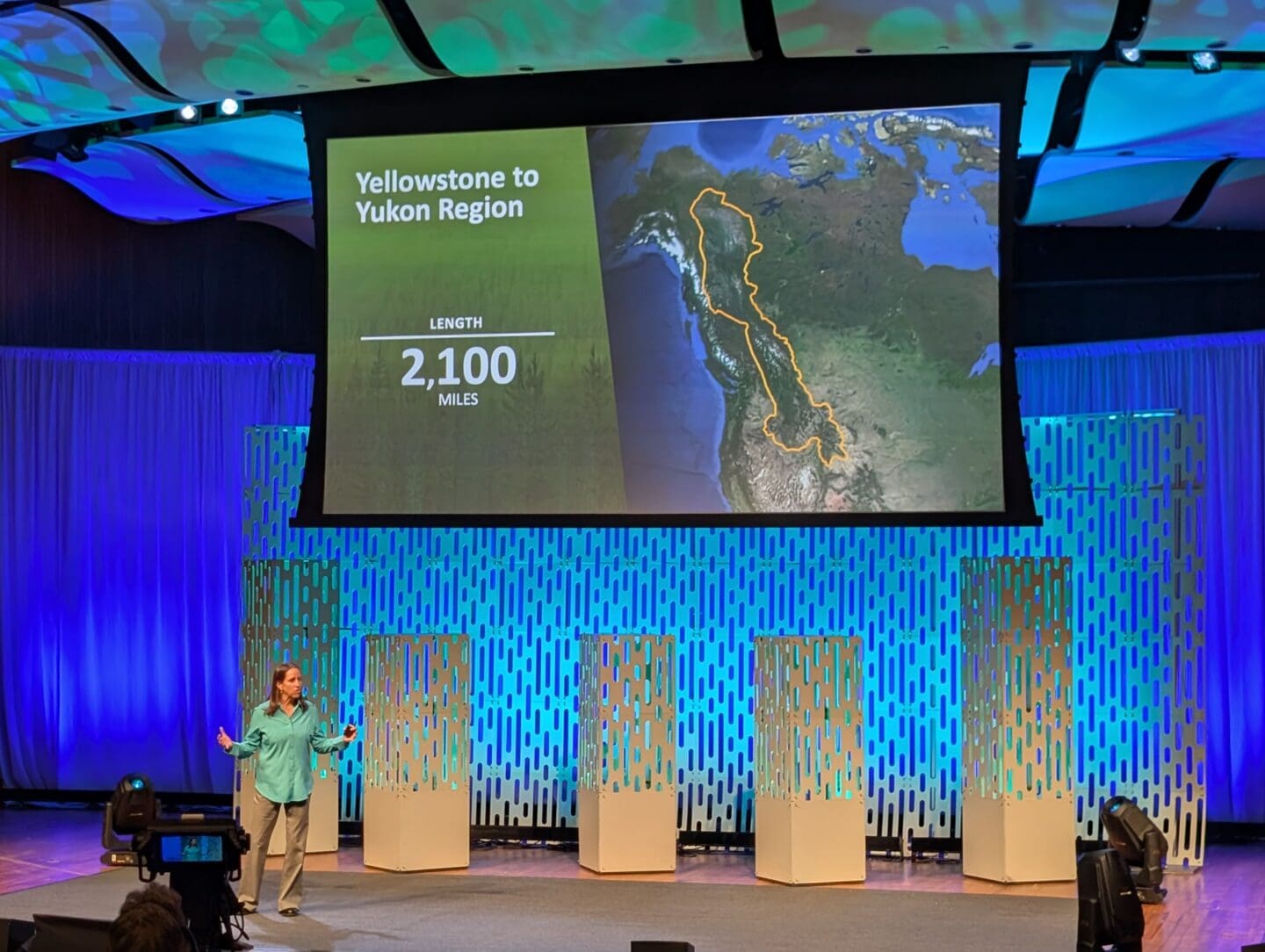
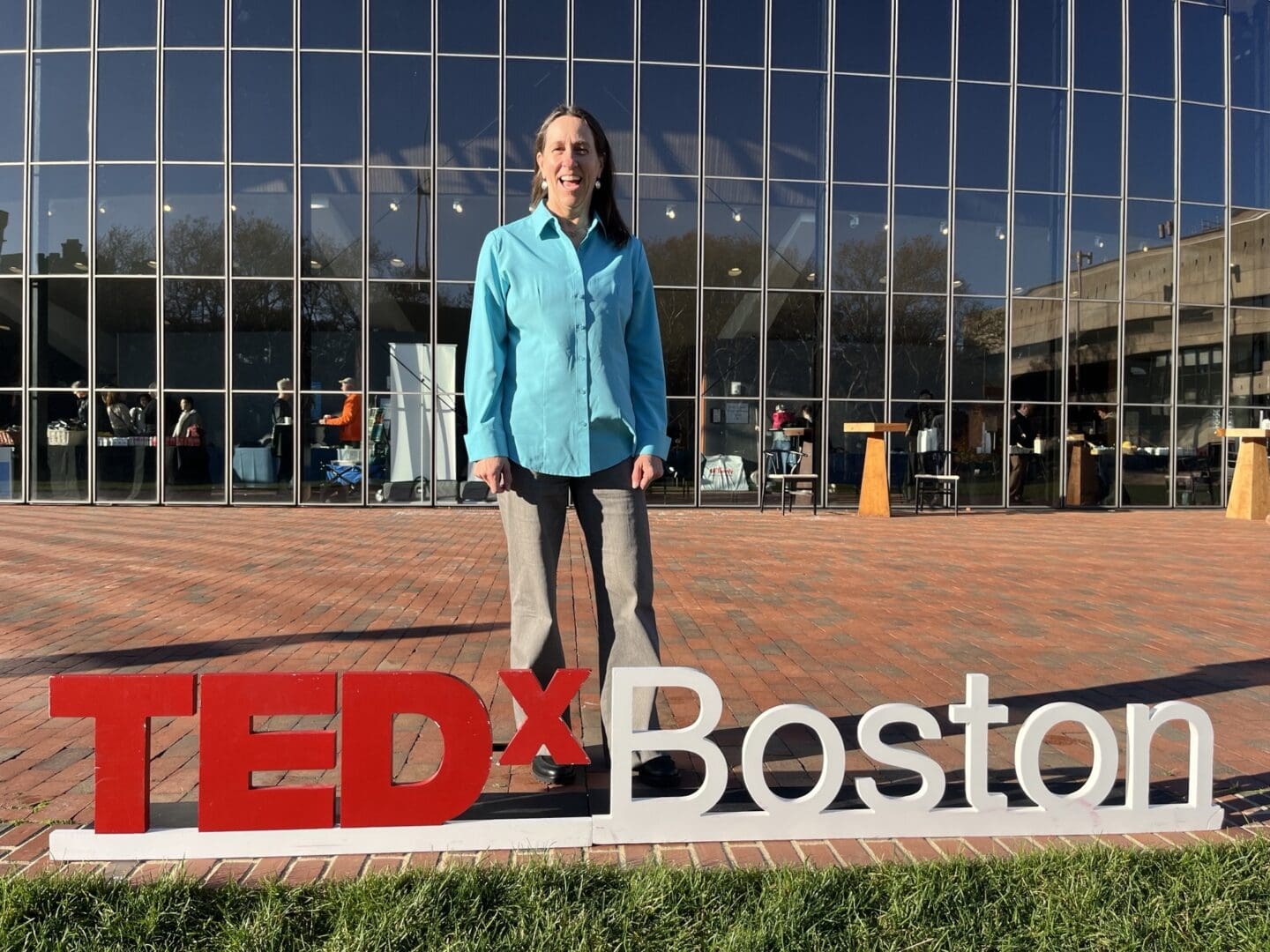
On November 15, 2025, Y2Y’s president and chief scientist Dr. Jodi Hilty stepped onto the TEDx stage at MIT with a radical yet elegant solution to stop biodiversity loss and address climate change — give nature room to move.
Speaking at Planet Action TEDx in Boston, a gathering of the world’s boldest environmental thinkers, Jodi made the case for something counterintuitive in our age of intervention and control. The best thing we can do for biodiversity and climate isn’t always to do more. Sometimes, it’s to create space for the wild to reclaim what it needs.
Her message comes at a critical moment. As species face unprecedented pressure and ecosystems teeter on the edge, large-scale conservation isn’t just an ideal. It’s happening, right now, across borders and generations.
What makes large-scale conservation work
In her TEDx talk, Jodi emphasized three essential ingredients for success:
- A compelling vision that inspires people to see nature as a shared legacy worth protecting
- The best available science and knowledge to guide smart, effective decision-making and action, and
- A strong and diverse community working together
“This is the scale that we can stop the biodiversity crisis and help solve the climate crisis.“
— Dr. JODI HILTY
Since 1993, Y2Y has collaborated with more than 800 partners, including Indigenous Nations, local communities, ranchers, scientists, governments, businesses, and conservation organizations, to turn this vision into reality.
Together, these efforts have helped increase protected and conserved areas in the region by more than 80 percent, with over a quarter of those lands now managed or co-managed by Indigenous Peoples.
Why protected areas alone aren’t enough
However, protected areas like national parks are essential to conservation but they cannot do the job alone.
As development grows around them, many parks have become ecological “islands,” too small and isolated to support wide-ranging species over the long term. Research shows that as human disturbance increases, wildlife migrations shrink or disappear altogether.
Jodi’s story about Pluie illustrates this beautifully. This GPS-collared gray wolf who had a remarkable journey in the early 1990s that crossed two countries, three U.S. states, and two Canadian provinces.
Over the course of two years, Pluie traveled through more than 30 jurisdictions demonstrating both the resilience of wildlife and the barriers they face. Her story helped spark a realization that protecting wildlife requires thinking far beyond park boundaries.
A vision and a movement at the scale nature needs
That realization gave rise to the Yellowstone to Yukon (Y2Y) vision in 1993: to connect and protect habitats across one of the world’s last intact mountain ecosystems, stretching nearly 3,400 kilometers (2,100 miles) from Wyoming to northern Canada.
Today, Y2Y is not only a geography, but also a global model for large-landscape conservation showing what’s possible when science, collaboration, and community come together.
The Yellowstone to Yukon region is the wildest large mountain system left on Earth, and its north–south orientation makes it especially important in a changing climate. As temperatures shift, connected landscapes allow plants and animals to move, adapt, and survive.
At the same time, these intact ecosystems store vast amounts of carbon, helping to slow climate change while supporting clean water, biodiversity, and resilient communities.
Creating room for nature — and people — to thrive
Protecting land is only part of the solution.
Connecting those lands, especially across roads and other barriers, is critical to keeping wildlife and people safe. Wildlife crossings, for example, are saving lives by reducing wildlife-vehicle collisions, and proving that coexistence makes ecological and economic sense.
Jodi closed her talk with a reminder that success through the Yellowstone to Yukon vision is part of a much larger global movement. Around the world, communities are stepping up to protect what nature needs, so that ecosystems can function today and for generations to come.
She also shared another motivation: her children. For them to be able to run wild rivers and experience wild nature, and for future generations to do the same.
“Isn’t that what we all want?” she asks.