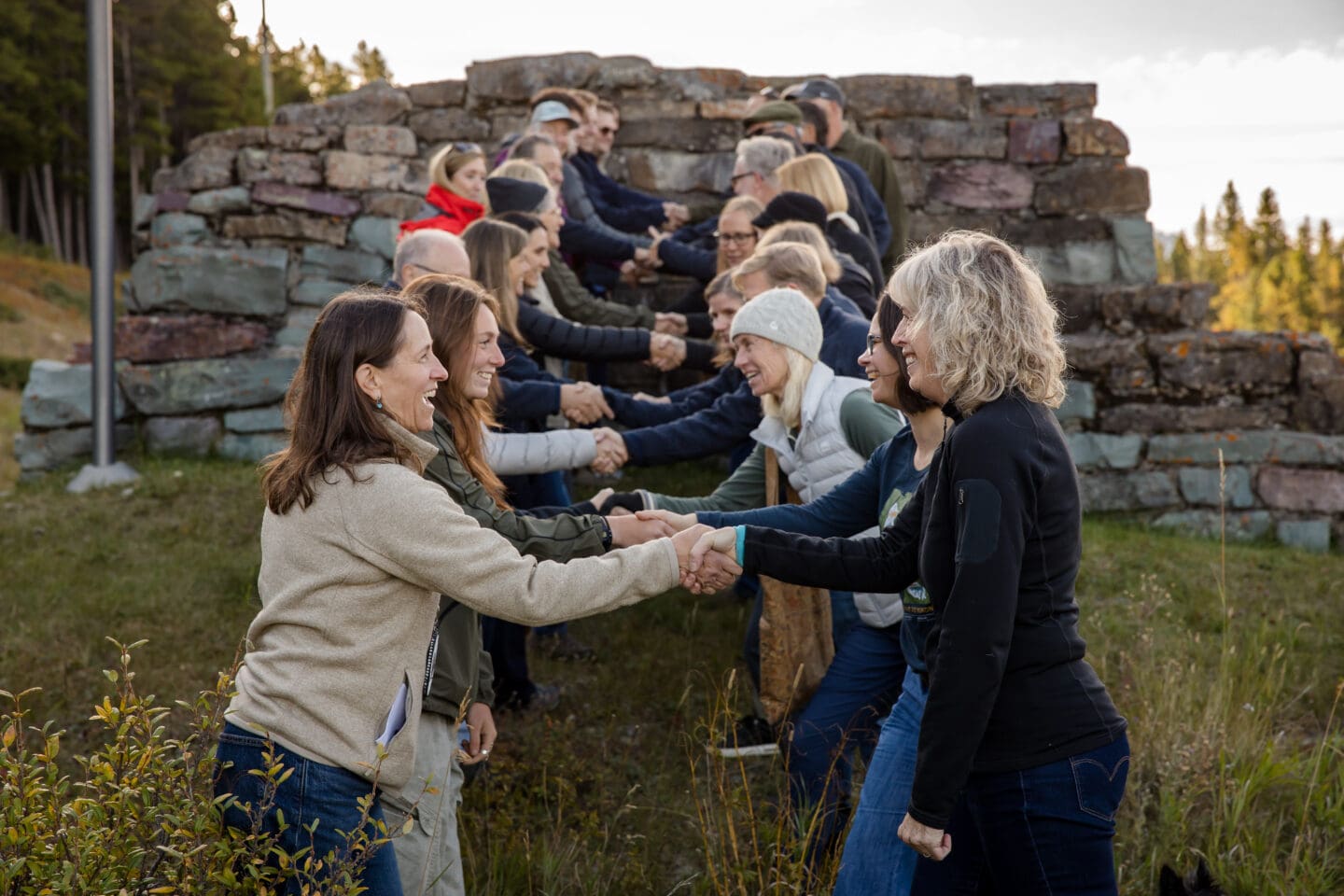
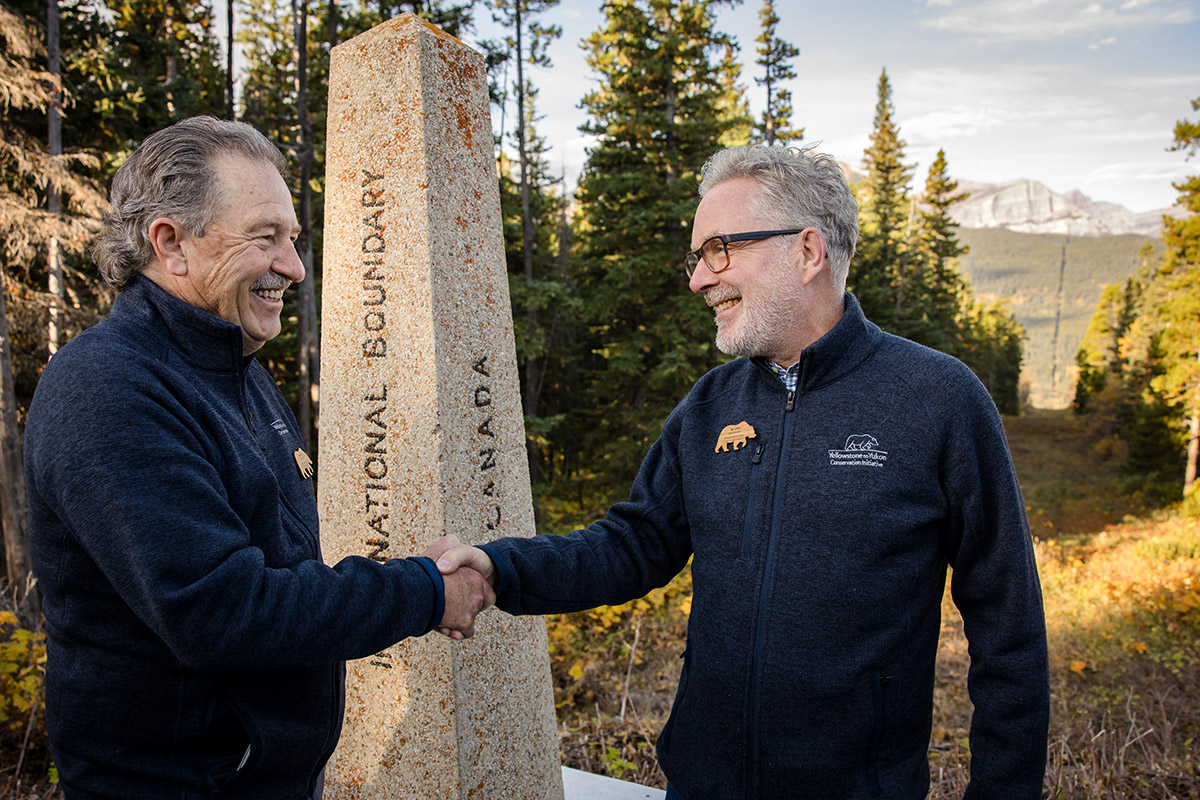
A handshake across the U.S.-Canadian border symbolizes ongoing partnership in conservation
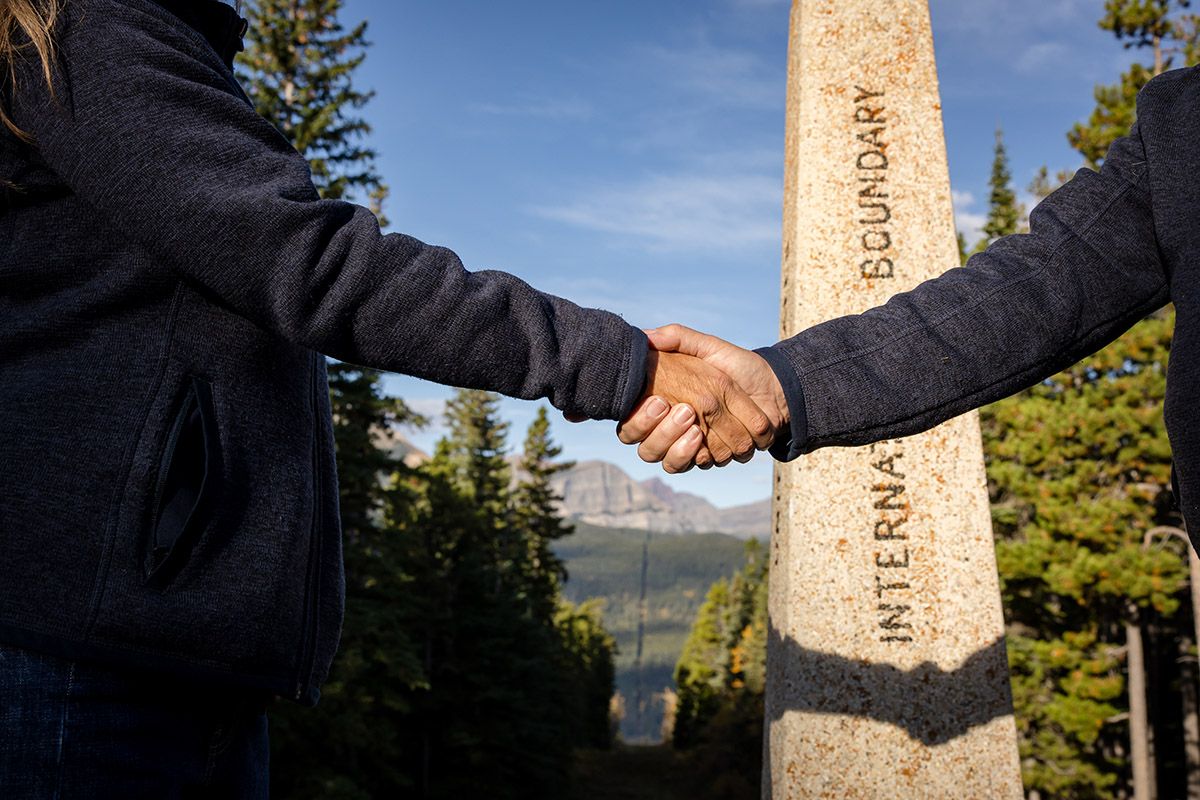
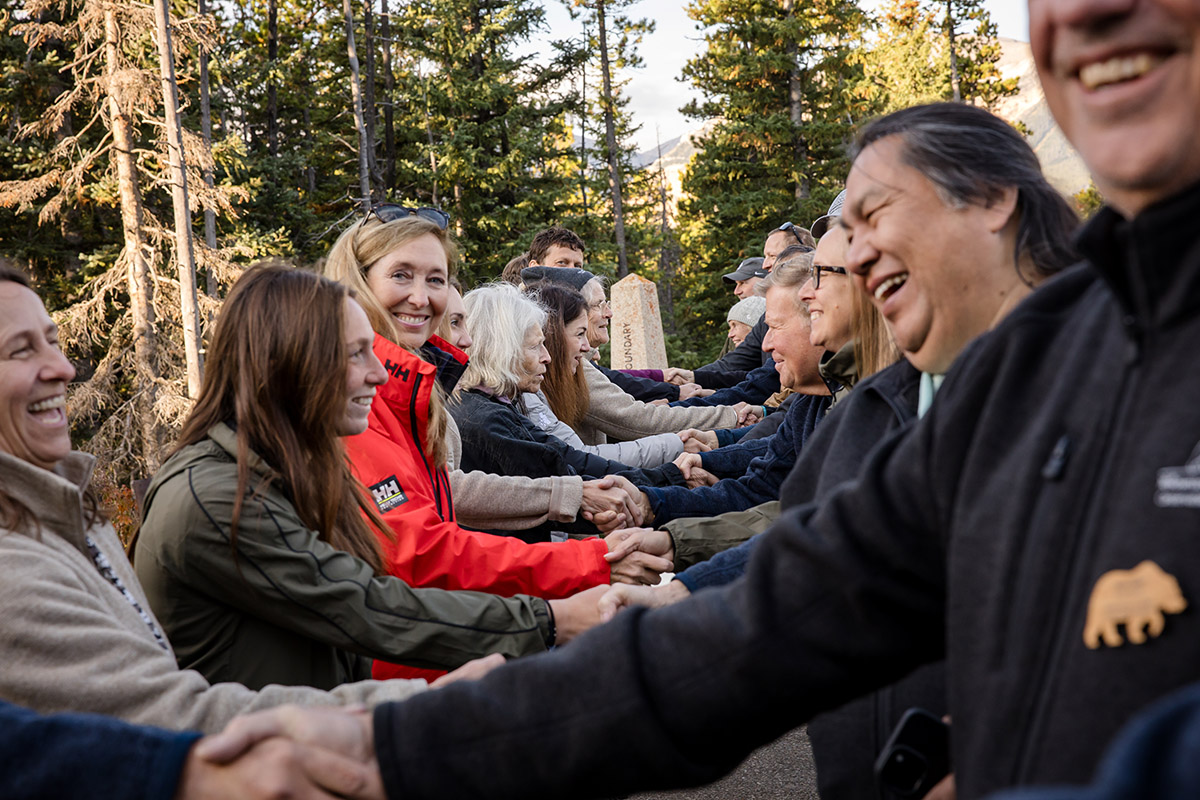
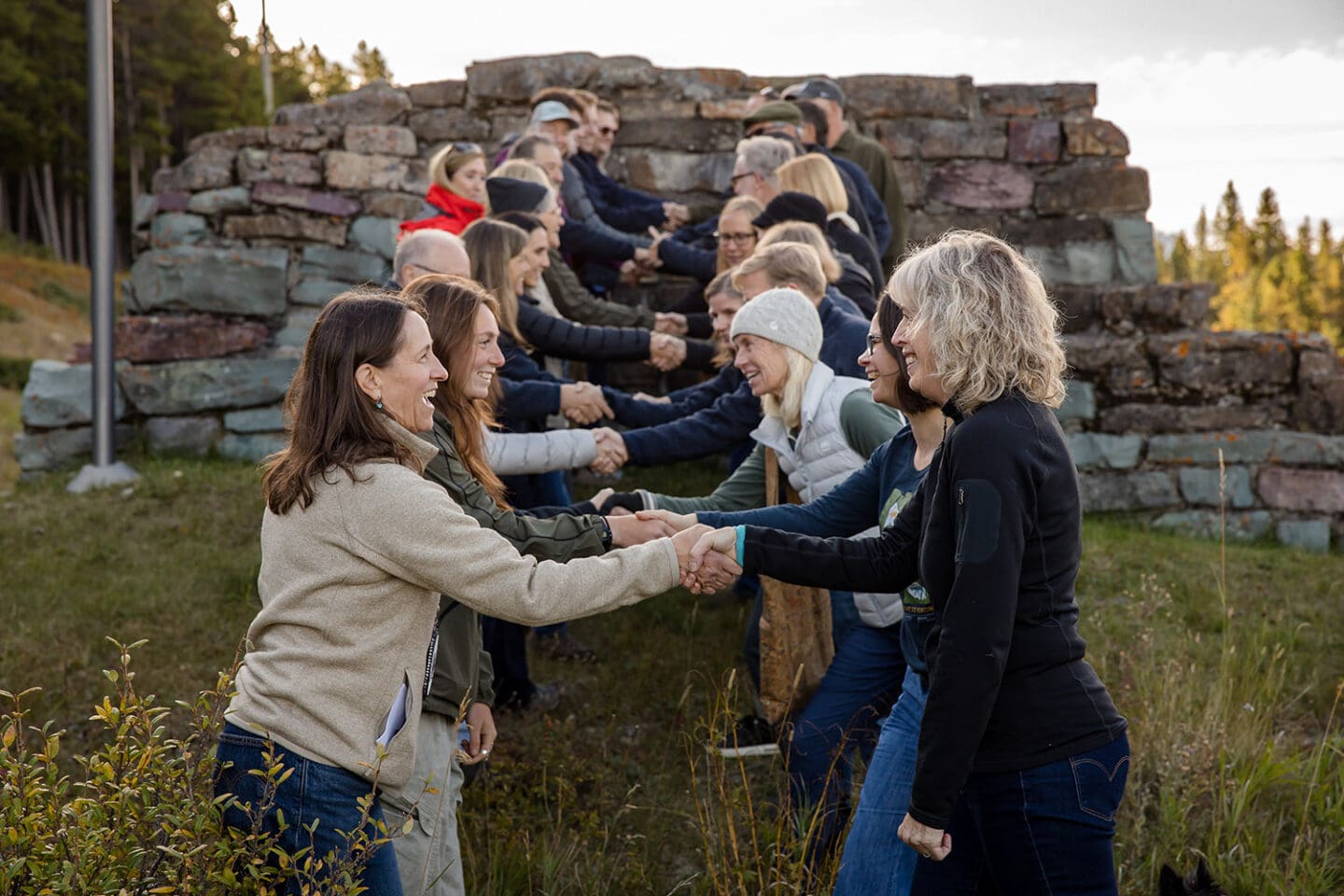
WATERTON-GLACIER INTERNATIONAL PEACE PARK – The Yellowstone to Yukon Conservation Initiative’s (Y2Y) president and chief scientist, Dr. Jodi Hilty, will join Canadian and U.S. conservation leaders on Thursday, September 24, at 9:00 am MDT, for a symbolic border handshake honoring 94 years of cross-border collaboration. Dr. Hilty will be joined by U.S. and Canadian board chairs at the Chief Mountain border crossing for a “Hands Across the Border” ceremony inside the Peace Park.
This handshake follows in the footsteps of Rotary Clubs on both sides of the border who created the world’s first Peace Park in the Crown of the Continent, a 10-million-acre transboundary ecosystem. The Rotarians cross-border partnership continues to inspire conservation across boundaries to this day.
This weekend, Rotary Clubs from across the U.S. and Canada will also come together to celebrate Waterton-Glacier International Peace Park and the spirit of cross-border cooperation that created it. This important ongoing tradition will also be celebrated by The 94th Annual Peace Park Celebration, on September 27th in Kalispell, Montana, where Dr. Jodi Hilty will speak to the Waterton-Glacier rotary clubs on Sunday.
These events come as Y2Y was named a finalist for the 2026 Earthshot Prize, one of 15 global finalists and one of three in the “Protect and Restore Nature” category for leading one of the largest cross-border conservation collaborations in history. Y2Y is the first Canadian-headquartered organization to reach finalist status for the prize, which was founded by His Royal Highness Prince William in 2020 to solve the world’s biggest environmental challenges with urgency and optimism.
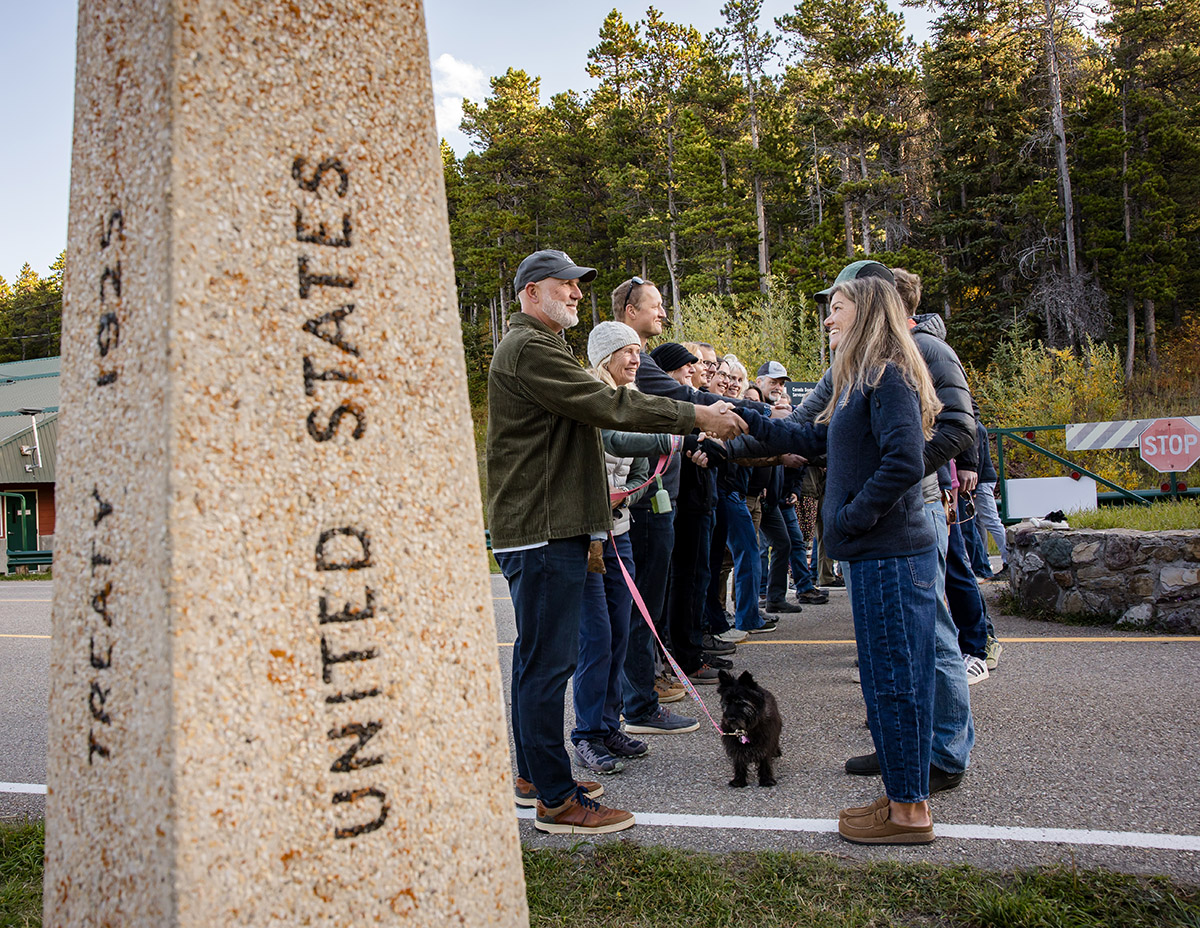
Waterton-Glacier: A living symbol of cross-border collaboration
“Hands Across the Border” traces back to 1932, when Waterton Lakes National Park in Canada and Glacier National Park in the U.S. joined to form the world’s first International Peace Park and was designated as a World Heritage Site in 1995. Local Rotary International clubs in Alberta and Montana have gathered near the border nearly every year often at Chief Mountain, Canada’s highest-elevation border crossing at 1,722 meters, (5,649 feet) to join hands across the line as a symbol of friendship, shared conservation stewardship, and peace between the two nations.
“Wildlife has shown us that they need large landscapes to roam and survive, far beyond any border on a map. I’m proud to represent this idea that fuels our work with more than 800 partners across the Y2Y region, as we collaborate to connect and protect the wildest large mountain region on Earth,” says Jodi Hilty. Yellowstone to Yukon is a story about ensuring animals have room to room; and people and nature both thriving.”
The Y2Y region is vast, unique and needs protection
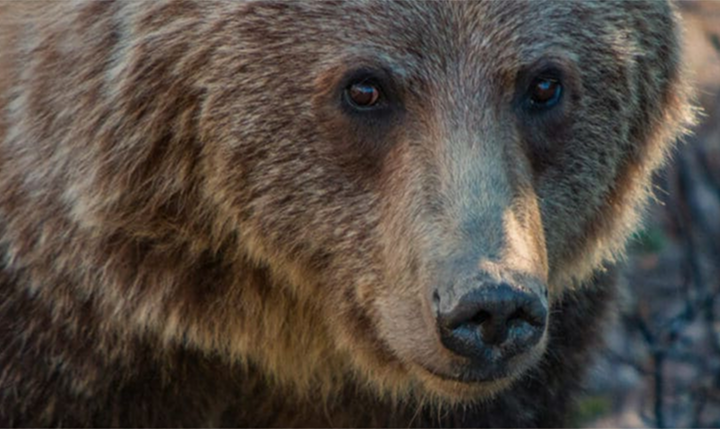
The Y2Y region spans a distance of 3,400 kilometers (2100 miles) along the spine of the Rocky Mountains from the Greater Yellowstone Ecosystem in the United States to Canada’s Yukon and is home to thousands of species that have persisted since the last Ice Age — including grizzly bears, lynx, wolves, wolverines and caribou — to ensure they continue to have room to roam to feed, find mates, and raise their young.
Y2Y’s origins trace to 1991, when a grey wolf named Pluie was collared near Banff, Alberta, during a rainstorm. Her collar revealed she ranged across roughly 100,000 square kilometers (almost 39,000 square miles) and 30 political jurisdictions. Her wide-ranging journey reshaped how scientists on both sides of the border understood the scale wildlife needs to survive and roam to find food, mates and safe places to raise their young.
Indigenous territories also stretch across the present-day border. First Nations have stewarded the Waterton-Glacier landscape since time immemorial. Known as Paahtomahksikimi (Inner Sacred Lake) in Blackfoot, the area has been used for over 10,000 years for hunting, gathering, and spiritual ceremonies, and is the current and ancestral territory of the Kainai, Piikani, and Siksika nations of the Blackfoot Confederacy, as well as Tsuut’ina, Stoney Nakoda, Ktunaxa, and the Metis Nation of Alberta.