How Bonner Ridge and Brock Creek are reconnecting wildlife corridors in Montana
If you drive along Interstate 90 between Missoula, Montana and the Blackfoot River corridor to the east, you’ll see how a line of highway splits the Rattlesnake, Garnet, and Sapphire mountain ranges from the rivers and forests they’re supposed to connect to. For wildlife trying to move between the Northern Continental Divide and Greater Yellowstone ecosystems, that barrier fragments their habitat and it’s also one of the most dangerous stretches of highway in Montana for both animals and drivers.
Two recently completed conservation projects by Y2Y and partners, Bonner Ridge and Brock Creek, are helping to overcome that barrier and to restore landscape connectivity and a key migration corridor that matters at the continental scale.
Where mountain ranges meet
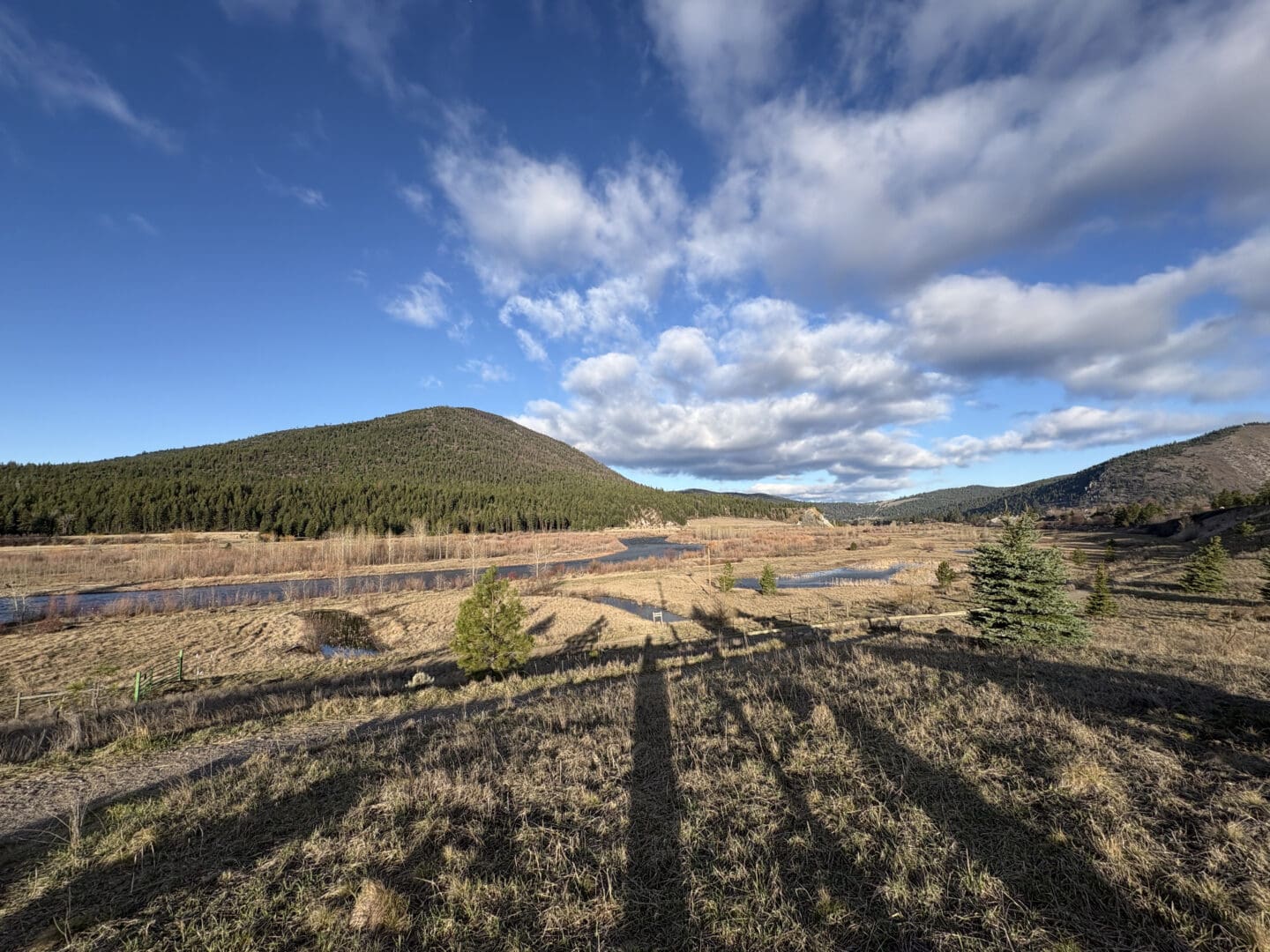
The 240-acre Bonner Ridge property sits at a rare geographic convergence: the meeting point of three mountain ranges on the south side of the Blackfoot River. It links hundreds of thousands of acres of public and conserved land, stewarded by The Nature Conservancy, the Montana Department of Natural Resources and Conservation, the Bureau of Land Management, and Five Valleys Land Trust, to Milltown State Park, via an underpass that carries wildlife safely beneath I-90, the Northern Pacific Railway, and a frontage road.
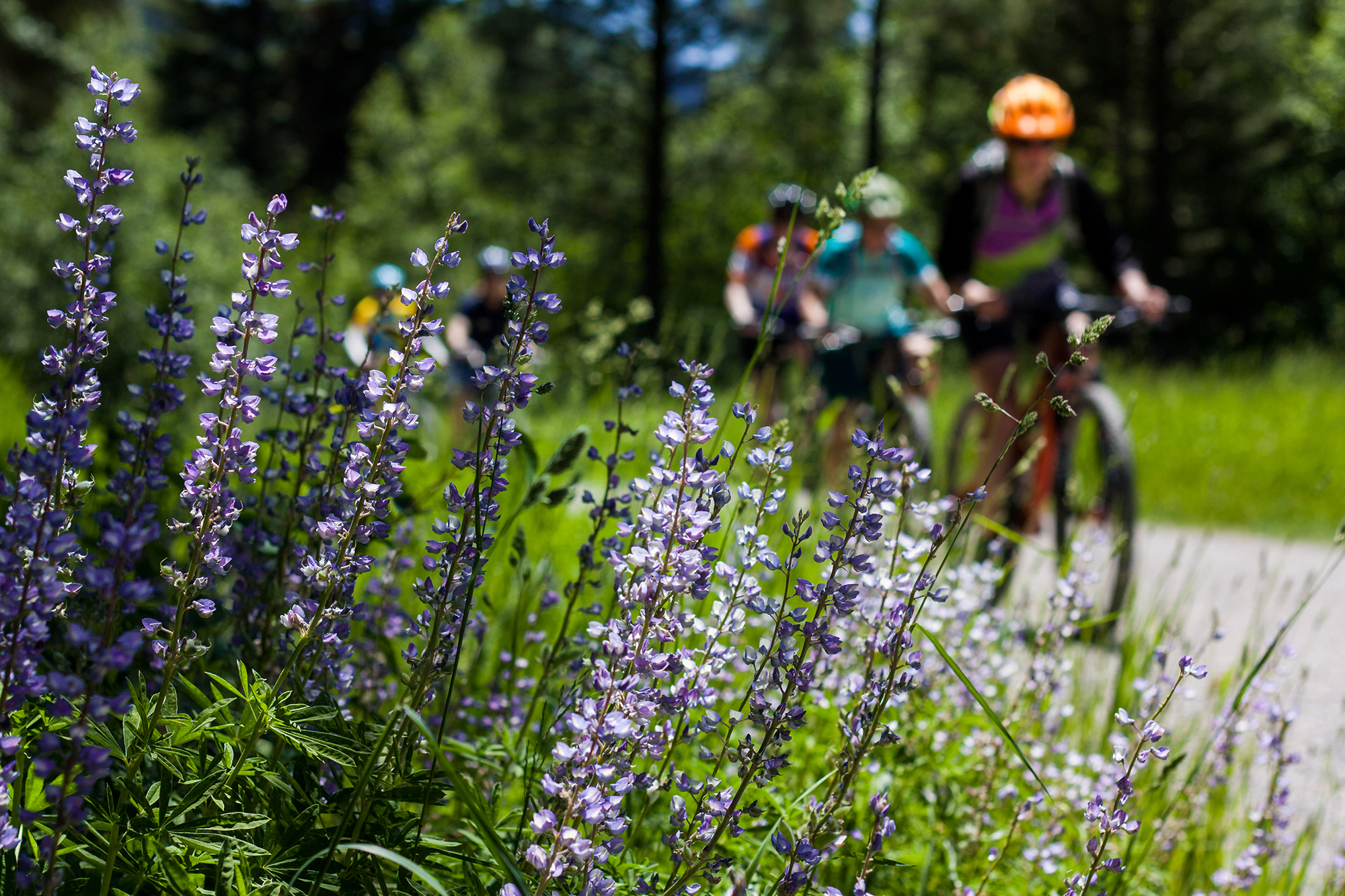
That underpass matters more than it might seem to a driver, because both sides of the Blackfoot River have been recognized by Montana Fish, Wildlife and Parks and Missoula County planning as vital wildlife corridors. But while the river’s north side has seen new development pressure, the south side where Bonner Ridge is now protected, remains one of the last, best chances to keep that connection open. The property also holds a bighorn sheep corridor and under Five Valleys Land Trust’s stewardship it will offer recreation opportunities balanced with the space wildlife need to move safely through.
A streamside lifeline to the West
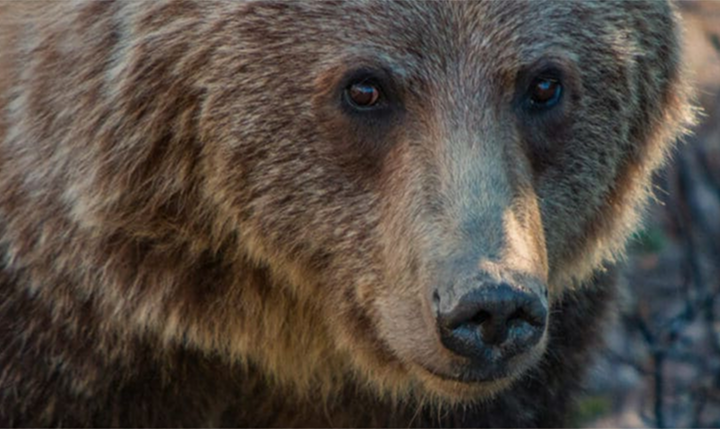
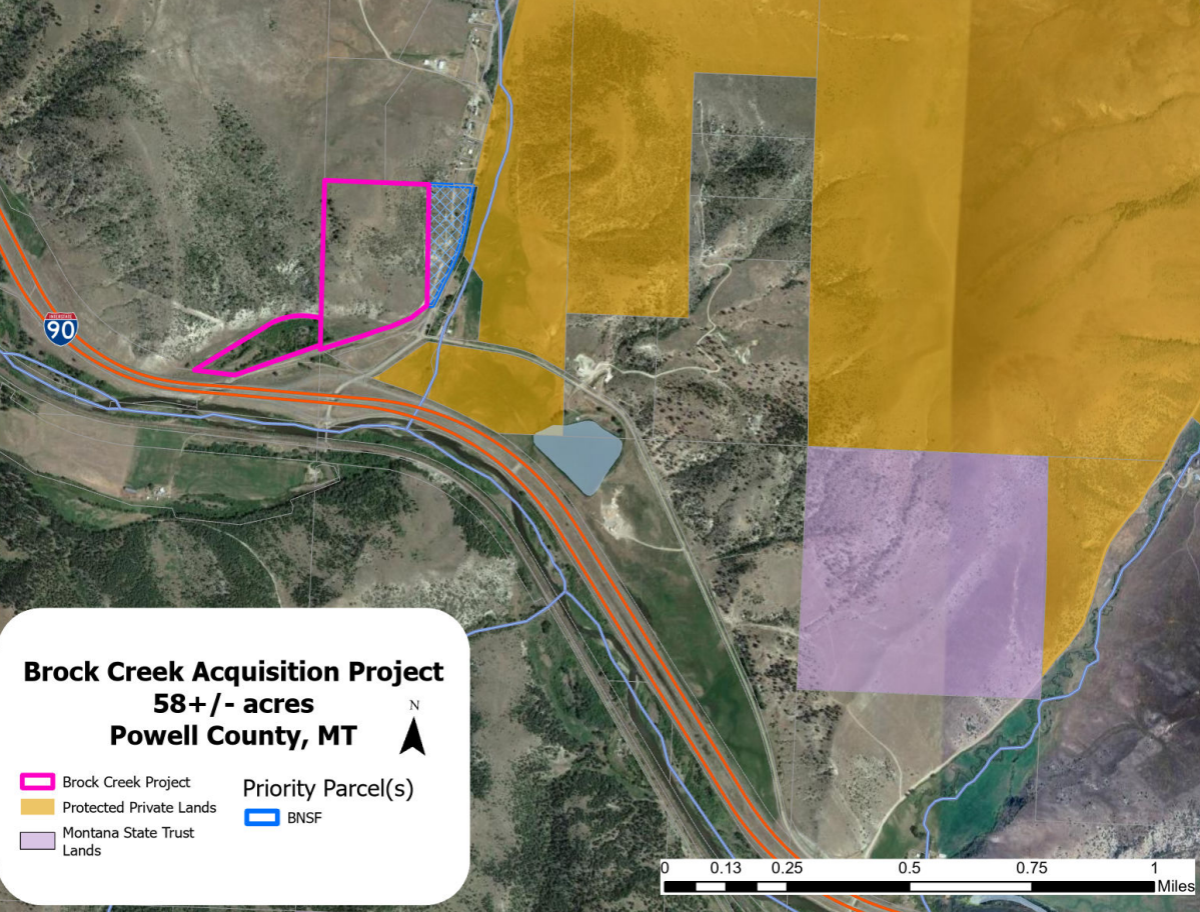
Further east along I-90, the Brock Creek property protects land just west of Brock Creek itself, extending connectivity to the Clark Fork River corridor. Streamside corridors like this one are essential because they provide the cover, food, and habitat that let a diversity of species such as deer, elk, and bears, move through the landscape. Wildlife biologists have documented movement across the property, confirming what the data already suggested — this land is a working piece of a much larger connectivity puzzle between the Northern Continental Divide and Greater Yellowstone ecosystems.
Made possible through a partnership with the Vital Ground Foundation – Brock Creek closed within a year of Bonner Ridge – these two separate deals, on two sides of the highway, are adding up to one connected corridor.
Why these projects matter now
Neither project happened by chance. Both sit in stretches of highway that a Y2Y-commissioned study by the Western Transportation Institute identified among the top 25% for wildlife-vehicle collisions in Montana. Both are adjacent to underpasses already built into I-90, existing infrastructure that only works for wildlife if the habitat on either side stays intact and connected. Both came together because between Y2Y, conservation-minded landowners and land trusts, we aligned strategic investment with strong ecological data and the right partnerships.
That’s the common thread for Y2Y’s work along I-90. We work with partners to find the places where data, economics, and partnership overlap. Bonner Ridge and Brock Creek are two of those places, now permanently protected.
What’s next
With both properties conserved, the work shifts from land protection to making the most of what’s now possible for bigger picture connectivity. Montana Department of Transportation and Montana Fish, Wildlife and Parks are key partners in the next phase to use these secured landscapes to improve how wildlife and people move safely across this stretch of highway.
This work happens because of partners, and the people and organizations Y2Y collaborates with: Five Valleys Land Trust, Vital Ground Foundation, and the many supporters and funders whose contributions made both deals possible. Every acre protected here is a direct result of that shared investment in keeping Yellowstone to Yukon connected through one corridor, one crossing, one piece of land at a time.
Related reading
A crucial wildlife corridor is secured in Idaho’s Kootenai Valley
Y2Y and our partners at Vital Ground celebrate a land deal that secures wildlife corridor and habitat for grizzly bears and other wildlife in north Idaho.
Creating vital connections
Connected landscapes are a lifeline for ecosystems, helping animals to find food, water and mates.