Three private land deals advance ecological connectivity across U.S. Northern Rockies
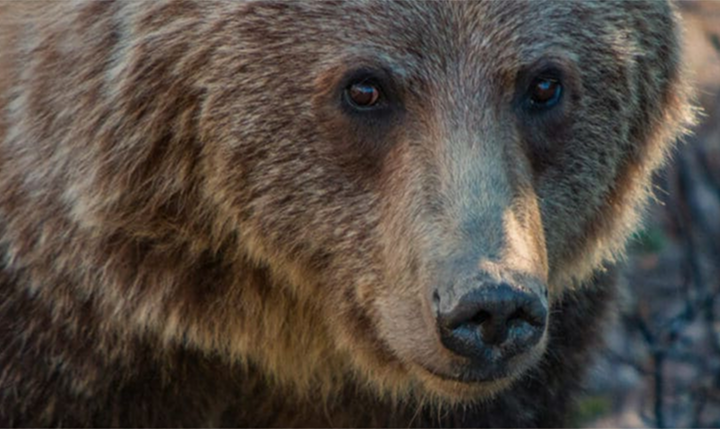
Each year in the Rocky Mountains, as winter turns to spring, elk and deer migrate with the seasons chasing the green wave of vegetation. Increasingly, grizzly bears are moving south, reclaiming terrain they haven’t roamed in years, moving through valleys and across ridgelines toward a landscape their ancestors once knew.
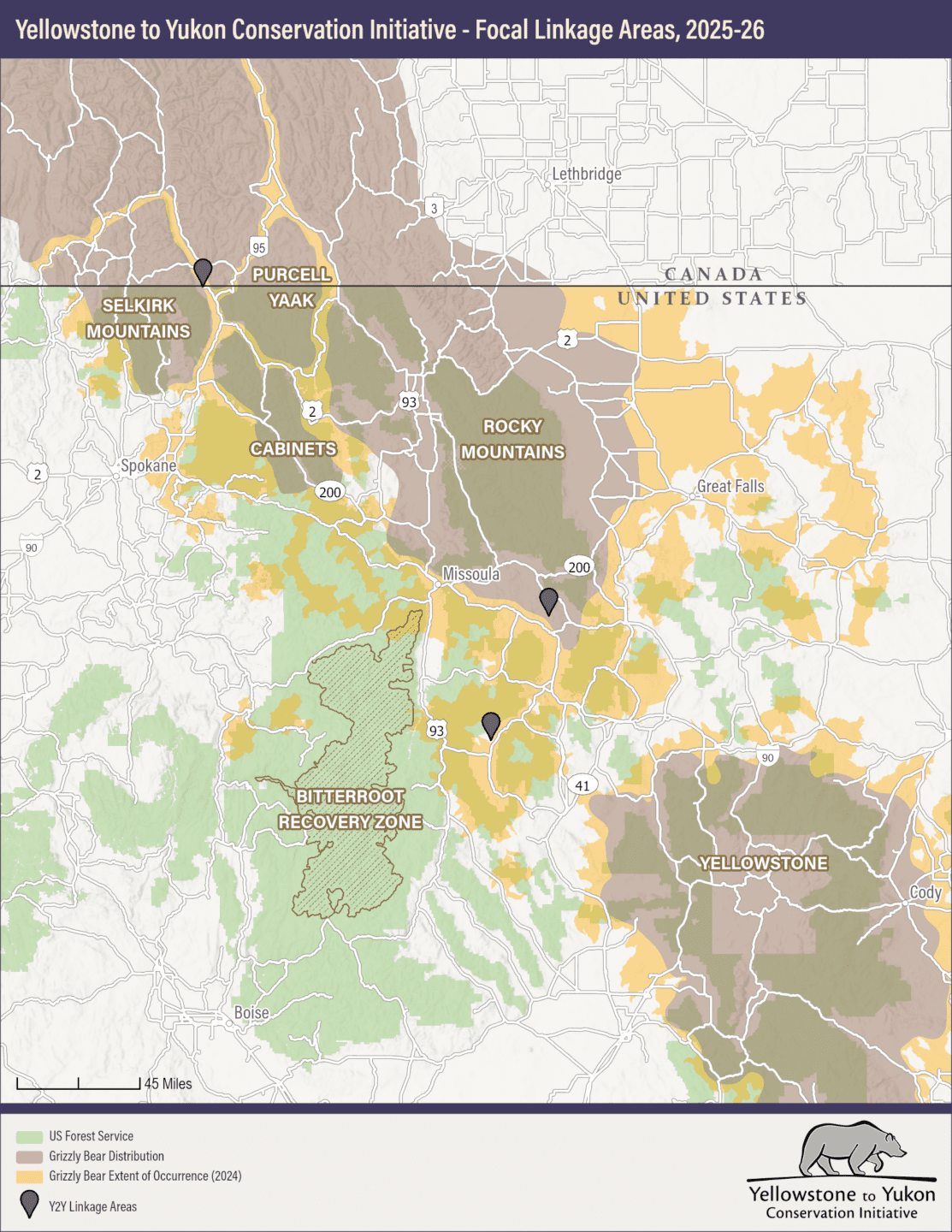
This spring, Yellowstone to Yukon Conservation Initiative (Y2Y) and our partners are proud to announce the closing of three conservation easements along the Continental Divide in Montana and the Selkirk-Cabinet mountains region of North Idaho. These are important areas where bear populations are returning and where private land conservation helps to build the greater web of wildlife connectivity. From north to south, each project protects a piece of the private lands puzzle that wildlife, and particularly grizzly bears, need to move across a connected landscape between Yellowstone, the Crown of the Continent and into Canada.
These deals share something else in common: in each case, the landowner donated all or a significant portion of the property’s value to the conservation easement. That kind of generosity is the foundation of a family legacy and durable conservation. Y2Y donors also stepped up and generously supported our ‘Nimble’ private lands fund to pay the remaining costs and make this a win for people and nature.
Dillin Farms, North Idaho — Kaniksu Land Trust
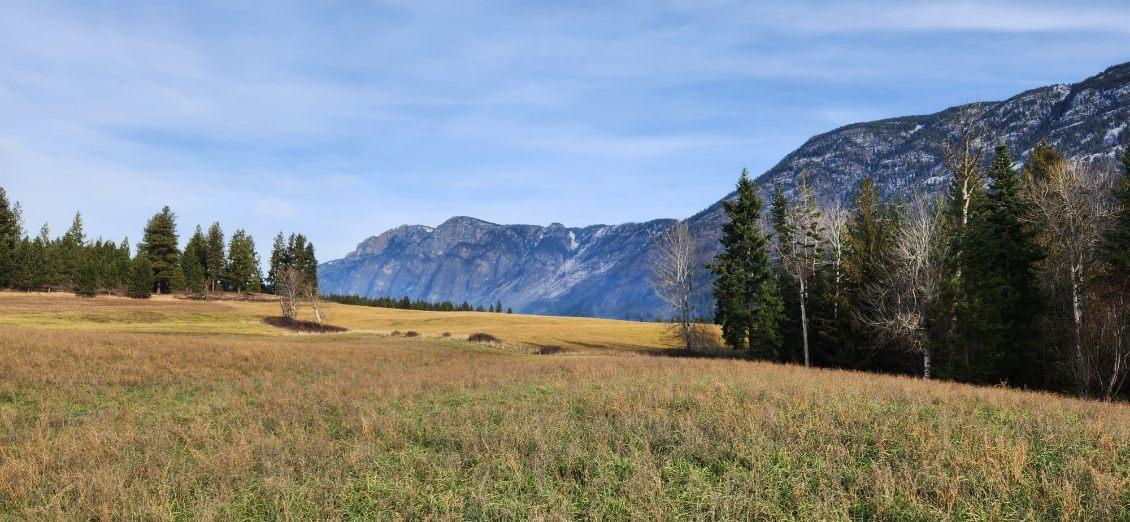
In the far northwestern corner of Idaho panhandle, close to the Canadian border, a 66-acre family parcel, Dillin Farms, sits in Idaho’s Kootenai River Valley. This property sits on a route that grizzly bears have historically used and are actively starting to use again. Y2Y donors also stepped up and generously supported our ‘nimble’ private lands fund to pay the remaining costs and make this a win for people and nature.
“The recently completed Dillin Farms Conservation Easement now protects family farmland in the shadow of Hall Mountain in North Idaho. This location serves as a strategic corridor for grizzly movement across the Kootenai River Valley between the Selkirk and Cabinet Ranges and is a known grizzly use area, which has contributed to the protection of other lands in the vicinity. The property also lies within the Panhandle Complex Big Game Priority Area and serves a wide array of wildlife species. Kaniksu Land Trust is grateful for the opportunity to partner with Y2Y, USDA-NRCS, and the longtime landowner to permanently conserve this important farmland parcel,” says Regan Plumb, conservation director at Kanisku Land Trust.
The property is also adjacent to existing conservation lands, extending a chain of protected habitats. Olds Creek, an annual stream running through the property, provides cover and movement corridors for wildlife traveling across or through the landscape. Other notable species in the vicinity include wolverine, Western toad, northern leopard frog and monarch butterfly.
Warm Springs Creek, Montana — Vital Ground Foundation
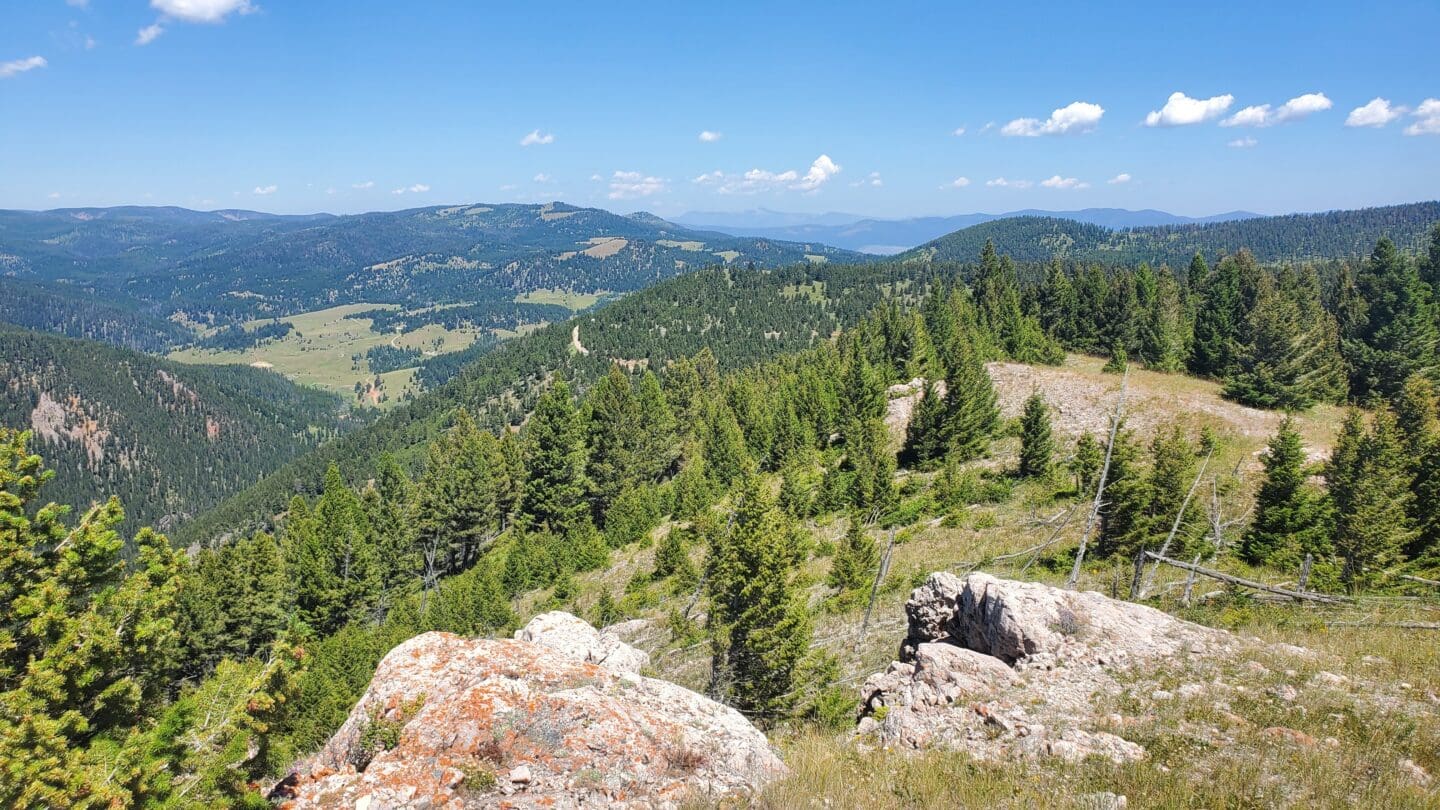
South of the Crown of the Continent, the Warm Springs property sits at a crossroads of wildlife movement. This conservation easement protects land that wildlife biologists have confirmed, through models and field data, sits in a major corridor for wildlife moving south out of Glacier National Park, through the Crown of the Continent and the Blackfoot River Watershed, and onward toward Yellowstone National Park.
“This project is important for grizzly bear recovery because it helps close the gap between the Northern Continental Divide and Greater Yellowstone populations, and it’s also important for other wildlife and for anyone who appreciates the open space and scenic landscapes of Western Montana,” says Mitch Doherty, Conservation Director for Vital Ground. “It’s inspiring to work with landowners who recognize that conserving their land carries these broad benefits.”
This corridor function is what makes this easement more than just protected acreage – it’s a critical link in a chain that allows wildlife populations to stay genetically connected and adapt over time.
“These are important areas where bear populations are coming back and where private lands help to build the greater web of connectivity,” says Eric Greenwell, Senior Connectivity Specialist at Y2Y. “We are grateful to these landowners for valuing the balance of their own livelihoods with the needs of wildlife. Y2Y is proud to partner with Vital Ground on this and other connectivity projects in the region.”
Read Vital Ground’s press release to learn more about Warm Springs.
Arrington Ranch, Big Hole Valley, Montana — The Nature Conservancy
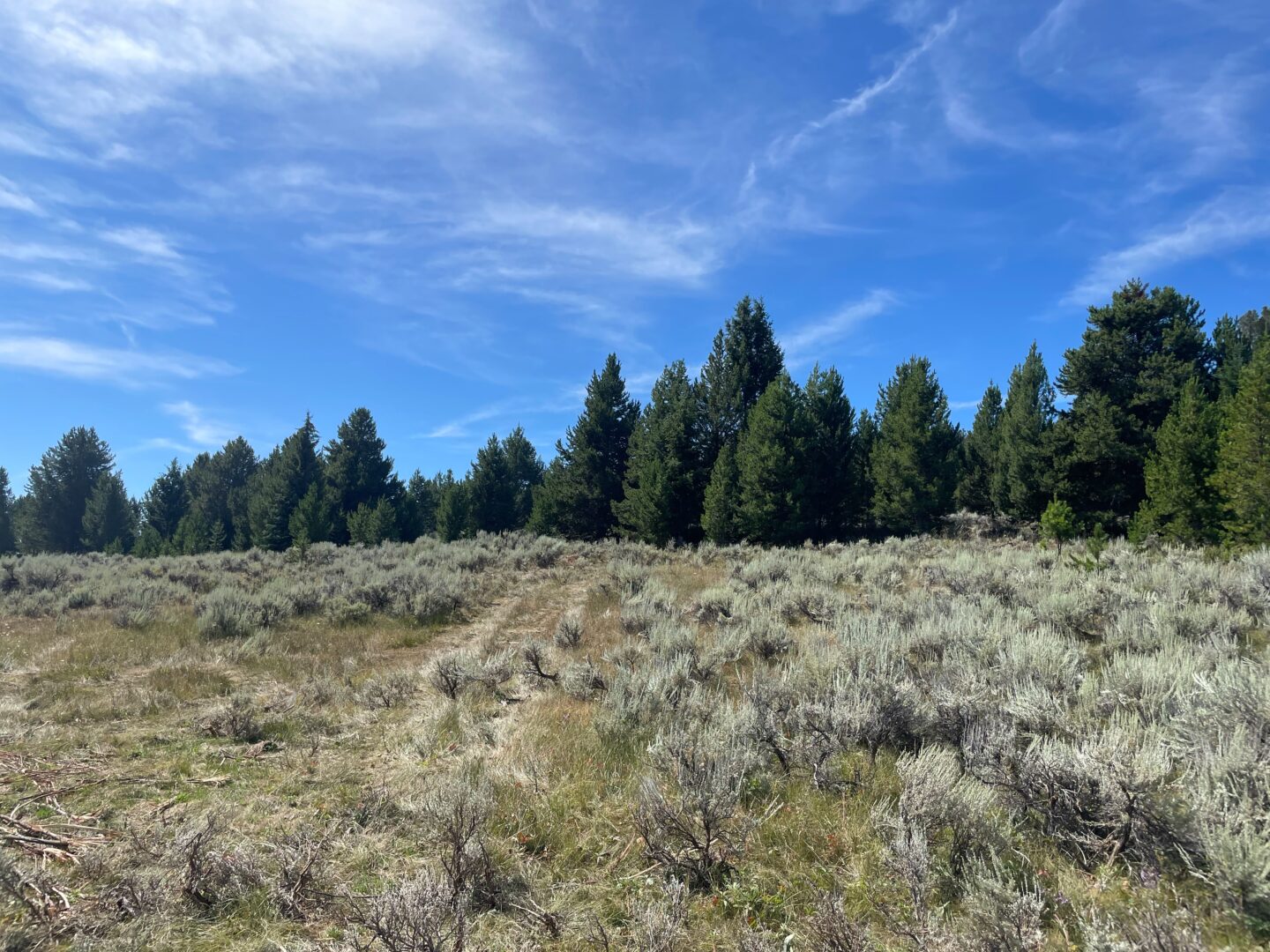
Deep in Montana’s Big Hole Valley, grizzly bears have begun appearing farther south in between of one their historical stronghold ranges in the Greater Yellowstone Ecosystem. Their presence here is a sign of recovery. The Arrington Ranch conservation easement, which closed in February 2026, helps ensure bears have somewhere new to go.
The ranch is adjacent to National Forest and Bureau of Land Management lands and to an existing 13,000-acre conservation easement already held by The Nature Conservancy. Together, this collection of public and conserved private lands stretches roughly one kilometer, and it’s now just one privately held parcel away from connecting with another conserved complex on the opposite side of the Big Hole Valley.
That gap matters. If the remaining parcel is protected, it would link a continuous protected corridor which is a critical step toward reconnecting the Bitterroot Grizzly Bear Recovery Zone to Yellowstone National Park.
The bigger picture
These three easements don’t stand alone. They are pieces of a larger mosaic: one built project by project, partner by partner, landowner by landowner that is slowly closing the gaps between conserved areas in the U.S. northern Rockies.
Private lands have always been part of this landscape. And when landowners choose conservation, they’re not just protecting their own property. They’re contributing to something that extends far beyond their fence lines: a connected ecological corridor where wildlife can move, populations can mix, and where grizzly bears can return to the range their species once held.
Y2Y is grateful to our partners at Kaniksu Land Trust, Vital Ground Foundation, and The Nature Conservancy and to the landowners and Y2Y’s private lands fund donors and Y2Y’s private lands fund donors whose generosity made these projects possible.