How do animals navigate a changing world?
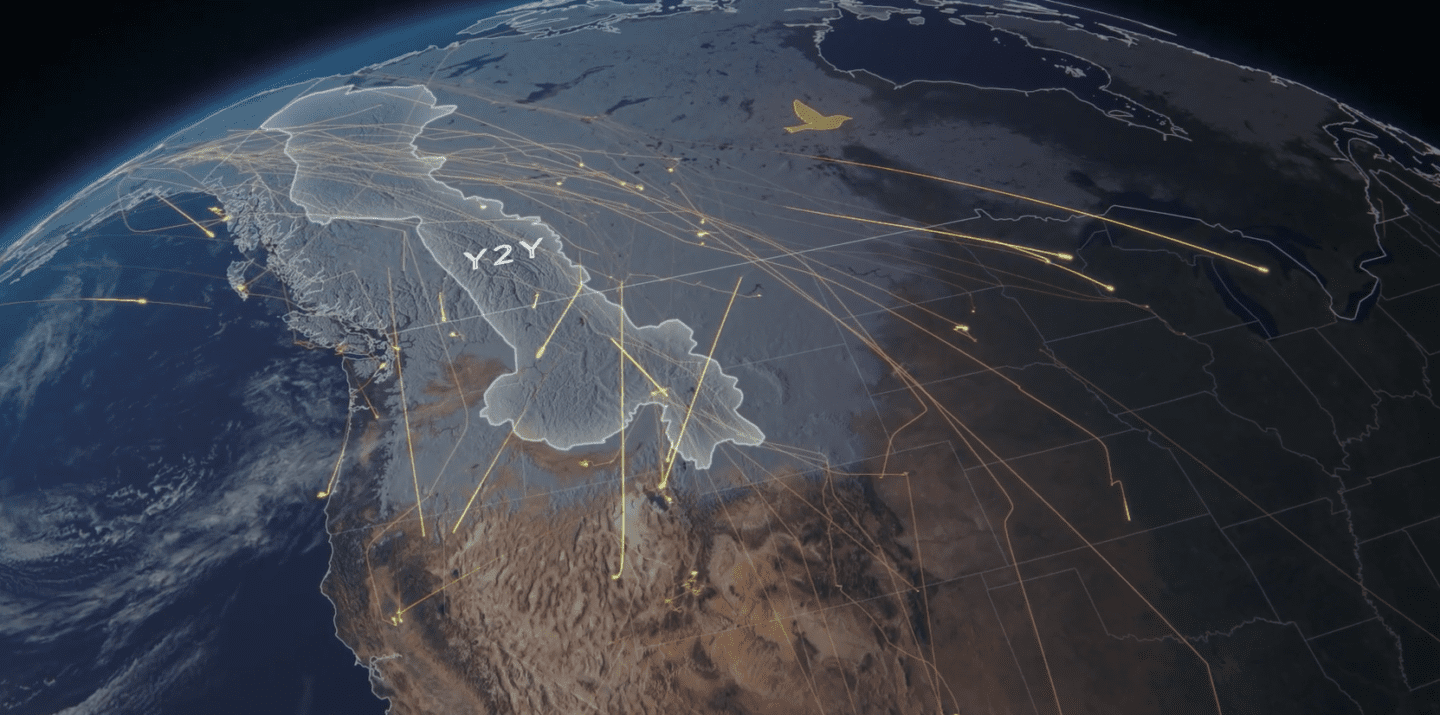
A new animation from the Room to Roam: Y2Y Wildlife Movements project explores one of the most compelling questions in conservation science — and the answer is visible from space.
Researchers across the Yellowstone-to-Yukon region combine high-resolution animal tracking with NASA satellite imagery to map the movements of wildlife across western North America.
The species tell the story: barren-ground caribou and mule deer following seasonal pulses of vegetation, elk and gray wolves moving through mountain corridors to give birth and feed, golden eagles and short-eared owls crossing vast open landscapes, and birds traveling flyways that span the continent.
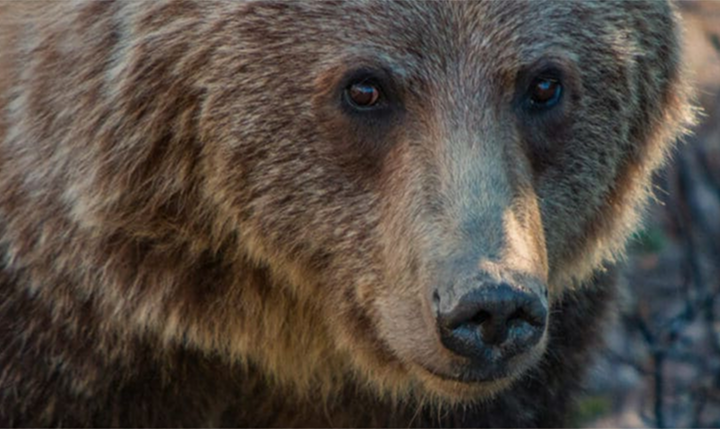
Some single animals tell their own stories, including a grizzly bear’s 46 attempts to cross a Montana highway as he tried to expand his range.
The magic behind the film
By layering animal movement paths over satellite-derived data such as vegetation green-up and snow cover, we see how environmental change shapes animal behavior, which corridors are critical to survival, and where human infrastructure creates barriers for animals.
Understanding the movements of species is critical to advance large-scale conservation, interconnected landscapes and wildlife corridors at the scale nature needs.
The project is building a shared archive of animal movement data through Movebank, an international platform hosted by the Max Planck Institute of Animal Behavior, alongside open tools that allow wildlife managers, ecologists, and conservation organizations to analyze habitat connectivity, movement patterns, and the effectiveness of protected areas.
This work is the result of a collaboration between dozens of organizations including the Center for Large Landscape Conservation, the Governments of Yukon and the Northwest Territories, HawkWatch International, the Max Planck Institute of Animal Behavior, North Carolina State University, The Ohio State University, the Teton Raptor Center, the University of Alberta, the University of Minnesota, and the Yellowstone to Yukon Conservation Initiative — with funding from the NASA Ecological Forecasting Program.