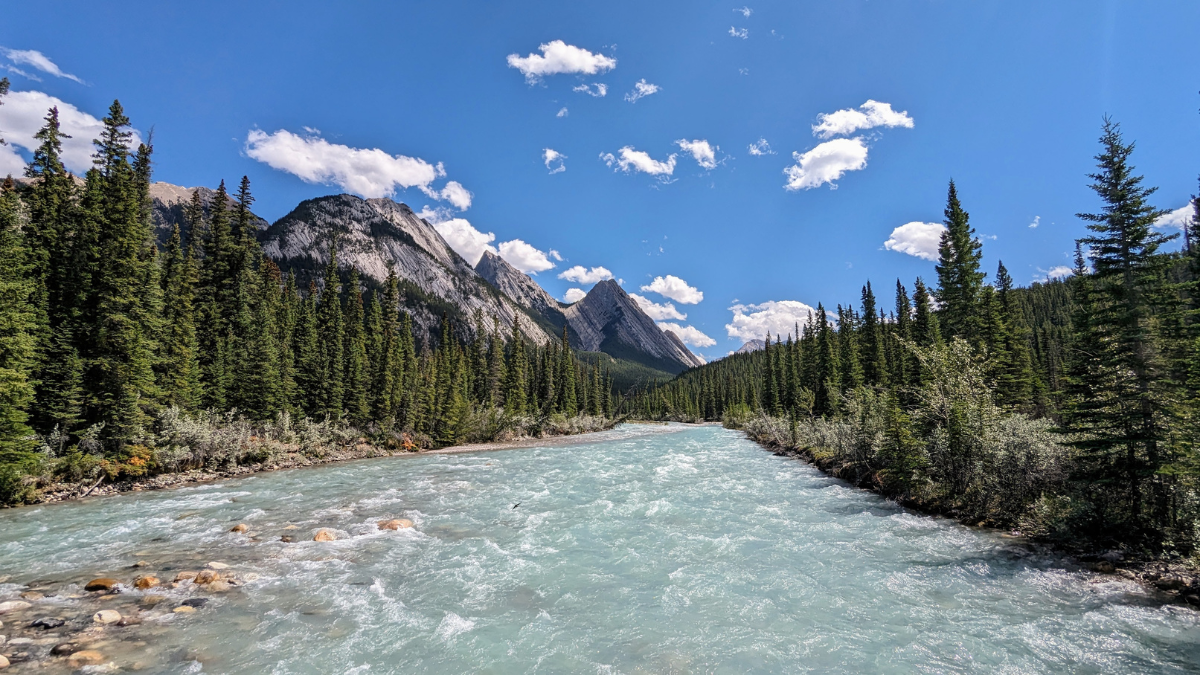
This global recognition acknowledges the impact of 800+ partners and a 3,400 kilometer living landscape
Yellowstone to Yukon Conservation Initiative (Y2Y) has been named a 2026 finalist for The Earthshot Prize, recognizing Y2Y and its partners as a global model for large-scale conservation at the scale nature needs to reverse the loss of biodiversity and a warming climate.
Y2Y is one of 15 finalists across five categories of The Earthshot Prize, a global environmental award founded by His Royal Highness Prince William in 2020.
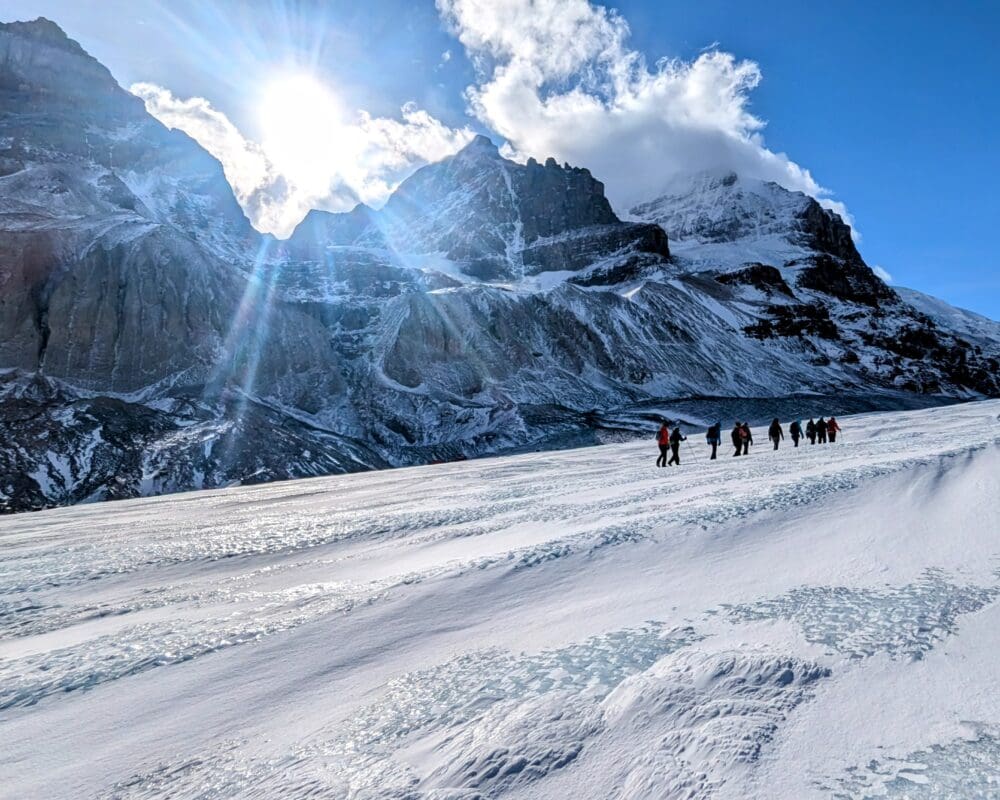
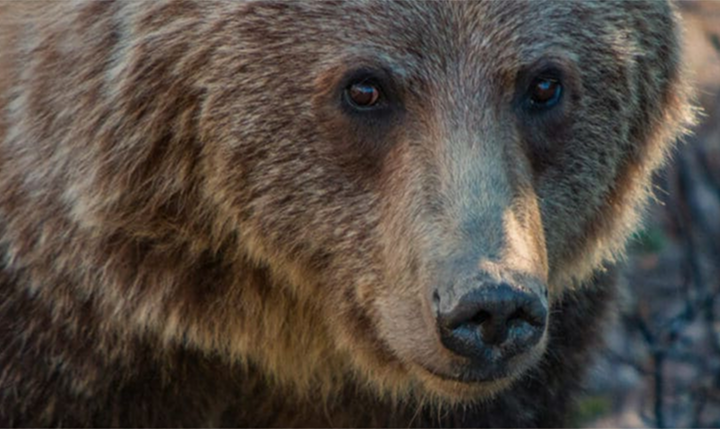
Y2Y and its partners have spent more than 30 years reconnecting the largest remaining intact mountain system on Earth. Work across the Y2Y region spans a distance of 3,400 kilometers along the spine of the Rocky Mountains from the Greater Yellowstone Ecosystem in the United States to Canada’s Yukon and is home to thousands of species that have persisted since the last Ice Age — including grizzly bears, lynx, wolves, wolverines and caribou — to ensure they continue to have room to roam to feed, find mates, and raise their young.
To achieve this ambitious, large-scale landscape connectivity mission, Y2Y works with Indigenous Nations, governments, scientists, landowners, communities, conservation partners and industry harmonizing the needs of people with those of nature.
What this recognition means for the Yellowstone to Yukon region
Y2Y and its more than 800 partners are tackling a global challenge. As wildlife corridors around the world face fragmentation and climate change forces species to adapt and reshapes habitat, this work offers a model for keeping species connected and resilient.
The recognition from The Earthshot Prize brings global attention to the solutions possible through cross-border collaboration, long-term stewardship and prioritizing nature. This nomination also elevates the importance of large landscape connectivity and the geographic region to an international level akin to other vast ecosystems such as the Amazon or Serengeti.
Y2Y is one of three finalists in the “Protect and Restore Nature” category. The Earthshot Prize organization will work with Y2Y to raise global recognition of the Yellowstone to Yukon region, build broader public support for large-landscape conservation and connect the organization with storytellers, and decisionmakers who can help accelerate protection across the Rocky Mountains and share its model worldwide.
“For more than 30 years, Y2Y has had the privilege to work with so many people and groups passionate about nature who have shown what’s possible when people work together at the scale wildlife truly need. This nomination is an opportunity to accelerate conservation impacts that build on decades long work of this collaborative effort. Our collective accomplishments to date demonstrate our approach is working,” says Dr. Jodi Hilty, president and chief scientist of Y2Y.
“The region is vast. It’s unique, and it takes all of us to protect it.”
Motivated by urgency, optimism and action
The Earthshot Prize aims to find the most impactful solutions from different geographies and sectors dedicated to solving the planet’s greatest environmental challenges.
The winner in each of the five categories receives a £1 million grant (CA$1.8million / US$1.3million) to continue their work and scale their solutions to repair the planet by 2030.
“Every year, our finalists give me renewed optimism. They show us that, even as the environmental challenges remain urgent, extraordinary people around the world are already proving that progress is possible. Seeing solutions work gives us all confidence to act. When they succeed, they inspire others and accelerate change. I’m proud to welcome these 15 finalists to the Earthshot Prize community and look forward to celebrating their stories in Mumbai this November,” says Prince William, president and founder of The Earthshot Prize.
“What feels especially meaningful from this nomination is the idea that we are inspiring the world to notice us. Conservation work rarely gives you time to stop and recognise progress. Being an Earthshot Prize finalist is a moment to celebrate what has been achieved, and to invite many more people to come on this journey with us,” says Hilty.
“Every year, our finalists give me renewed optimism. They show us that, even as the environmental challenges remain urgent, extraordinary people around the world are already proving that progress is possible. Seeing solutions work gives us all confidence to act. When they succeed, they inspire others and accelerate change.”
Prince William, president and founder of The Earthshot Prize.
How the Y2Y story began
The idea behind Y2Y began with a wolf named Pluie. In 1991, she was fitted with a satellite tracking collar near Banff National Park, and over the next two years, she travelled across an area of more than 100,000 square kilometres (close to 39,000 miles), crossing three U.S. states, two Canadian provinces, three national parks and about 30 jurisdictions.
Pluie’s journey showed scientists that individual parks were not enough, and that wildlife needed connected habitat on a much larger scale that no single park, agency or organization can protect on its own. That insight helped inspire scientists and conservationists on both sides of the border to create the Yellowstone to Yukon vision in 1993.
Since then:
- Y2Y and its 800-plus partners have contributed to protecting roughly 25 million hectares, [almost 62 million acres], or approximately 1.3 million square kilometers — roughly the size of Peru, more than three times the size of California, and larger than France, Germany and the United Kingdom combined.
- Protected areas across the Y2Y region have grown by more than 80 per cent, twice the rate of the rest of North America.
- More than 200 wildlife road crossings projects have been built, reducing wildlife-vehicle collisions with hooved animals on parts of Banff’s Highway 1 by 96 per cent.
- British Columbia’s Klinse-Za caribou herd, brought back through Indigenous-led stewardship, has grown from 38 animals in 2013 to 187 in 2025. Indigenous leaders continue to ensure the population grows and that protected areas are expanded for habitat.
- The distance between isolated U.S. grizzly bear populations has narrowed from 240 kilometers to 75 kilometers, bringing them closer to genetic connectivity — vital for their survival.
Y2Y and partner’s work combines land protection with practical ways of reconnecting habitats. Wildlife overpasses and underpasses allow animals to cross busy roads safely, while voluntary conservation agreements and protected private lands keep important routes open between national parks and other protected areas.
Significant conservation progress in the Yellowstone to Yukon region is happening under Indigenous leadership. Already 25 per cent of lands protected in the Yellowstone to Yukon region are managed or co-managed by Indigenous Peoples. Y2Y is honoured to be invited to work with these nations to support Indigenous-led conservation through partnership, stewardship and practical support to turn those ambitions into lasting protection.
While the Yellowstone to Yukon region experiences the impacts of climate change, it also offers natural solutions and is a natural climate regulator. The Yellowstone to Yukon region demonstrates how to protect ecosystems that are still healthy and intact. This provides a climate solution example and model for other landscapes, helping push conservation efforts worldwide toward a turning point where positive change becomes a snowball effect.
This landscape also contributes planet-scale climate progress few people see: though it covers only about 7 per cent of the land area of Canada and the U.S., its forests, wetlands, peatlands and soils store roughly 13 per cent of the two countries’ carbon. Each year, the region absorbs carbon equivalent to more than 80 per cent of emissions from Canada’s passenger vehicles.
Current and upcoming milestones for Y2Y region include:
- Indigenous-led Land protection by 2030: Ensuring the additional protection of more than 20 million hectares [50 million acres] to reach at least 30 per cent protection of the region by 2030. Currently, 7.3 million hectares [over 18 million acres] are agreed upon by Indigenous, local and national governments and waiting for formal designation. More than 8.1 million hectares [over 20 million acres] are under advancing, active planning with Indigenous leadership, such as Dene K’éh Kusān in northern British Columbia.
- Connected habitats: Delivering at least 50 additional wildlife crossings by 2030, building on more than 200 crossings already constructed across the region.