Transboundary collaboration of government agencies builds momentum for wildlife crossing projects
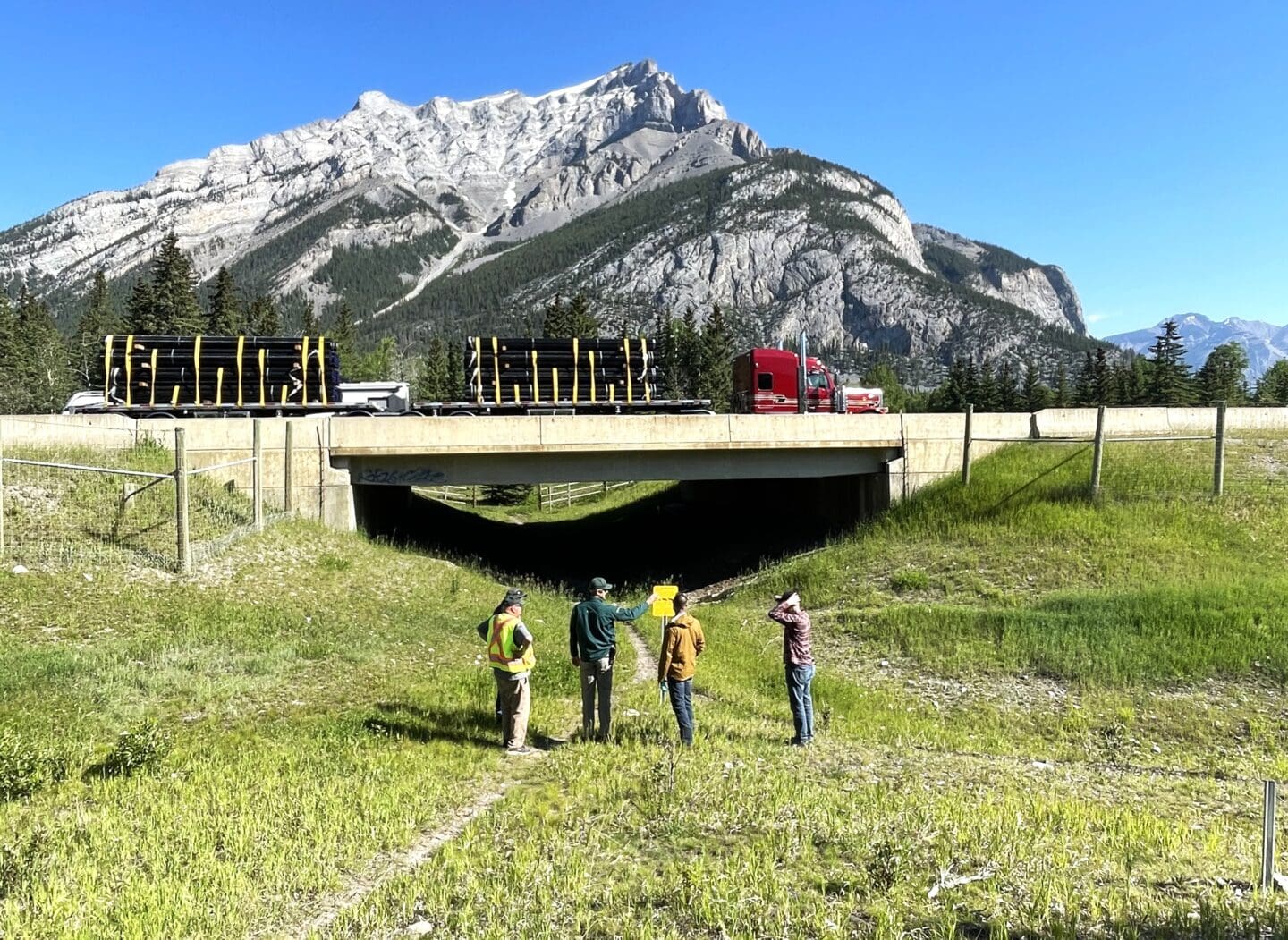
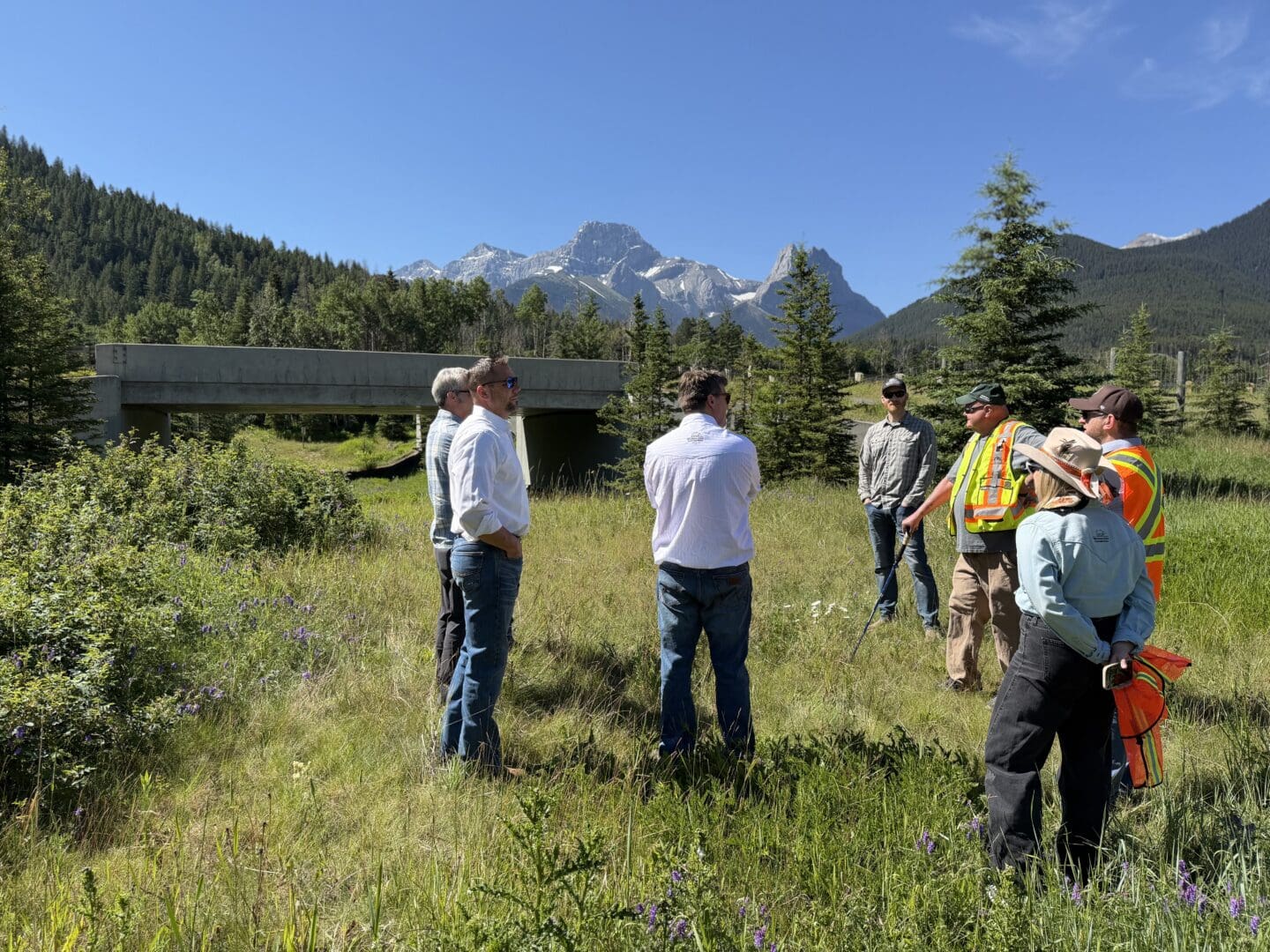
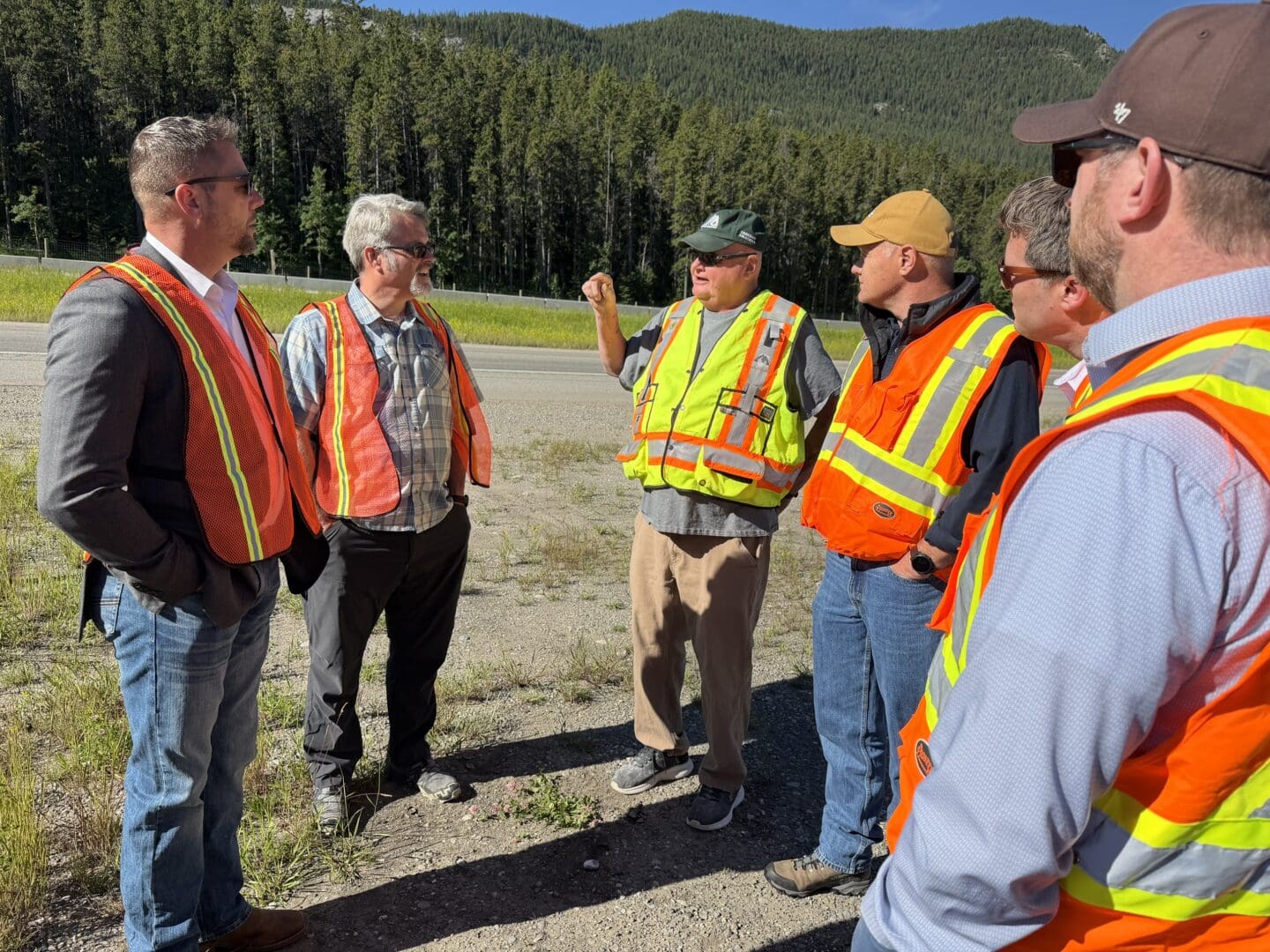
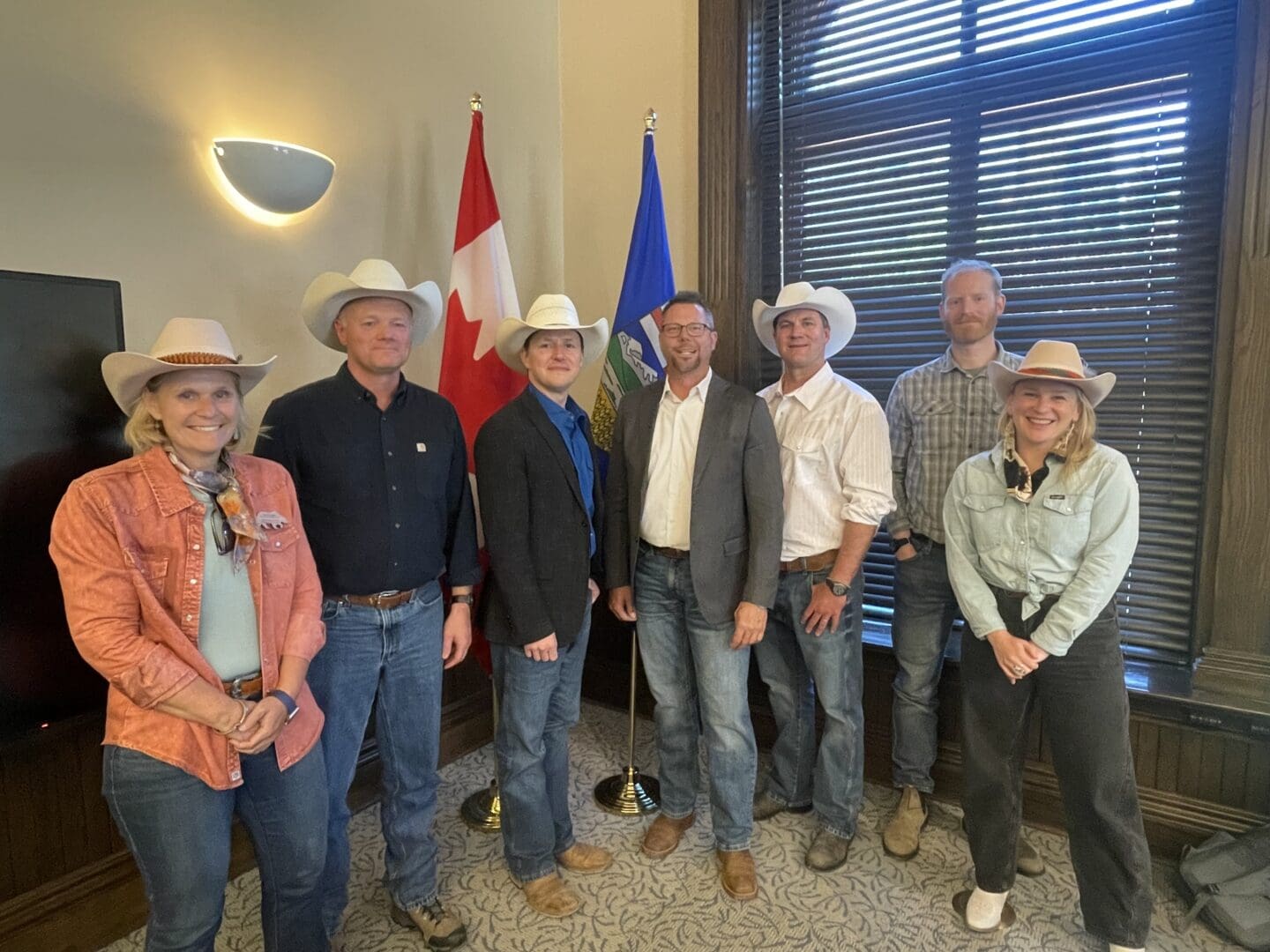
Last week, while the Calgary Stampede filled the streets with music and crowds, a quieter kind of progress built just outside the city. Leaders from the Montana Department of Transportation (MDT) and Alberta’s Ministry of Transportation and Economic Corridors met to walk the landscape together touring the wildlife crossing network along Highway 1 through the Bow Valley and Banff National Park in Alberta.
It’s the kind of trip that continues to push us to live up to the landscape and is exactly how lasting change is built: multiple agencies, one shared cause, and a willingness to learn from what’s already working.
The impact
Although large wildlife overpasses are commonly what stand out the most, there are also dozens of underpasses along the 116-kilometer section of Highway 1 that follows the Bow River valley from the eastern edge of the Rockies through Banff National Park to the British Columbia border. Seven overpasses and 41 underpasses connected to 95 kilometers of wildlife exclusion fencing have drastically reduced animal-vehicle collisions by 80% on average and helped hundreds of thousands of animals safely cross this busy highway. Alberta’s newest crossing, the recently completed Peter Lougheed overpass west of Calgary, has already recorded 14 different species using it safely, on a four-lane divided highway animals would otherwise have little chance of crossing.
“Last week, I traveled to meet with Minister Devin Dreeshen. Alberta is a world leader in the development and preservation of wildlife crossings,” says MDT Director, Christopher Dorrington. “I greatly appreciate the partnership and opportunity to learn about their wildlife corridor advancements.”
One takeaway stuck with the group: not every crossing has to be a big, visible overpass. Much of Alberta’s success comes from underpasses paired with high-quality fencing that funnels animals safely to the crossing points, which is proof that thoughtful, well-placed infrastructure can matter as much as scale.
Why it matters
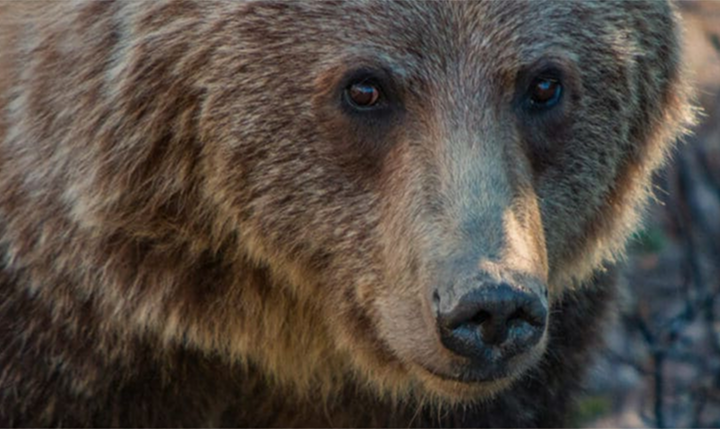
The research backs it up. Results from a recent study from the Western Transportation Institute identified priority highway segments across western Montana’s Y2Y region. The study addressed some highway segments in western Montana, including on Interstate 90 (I-90), where new wildlife crossings could address both wildlife collision concerns and provide needed wildlife connectivity for species like grizzly bears.
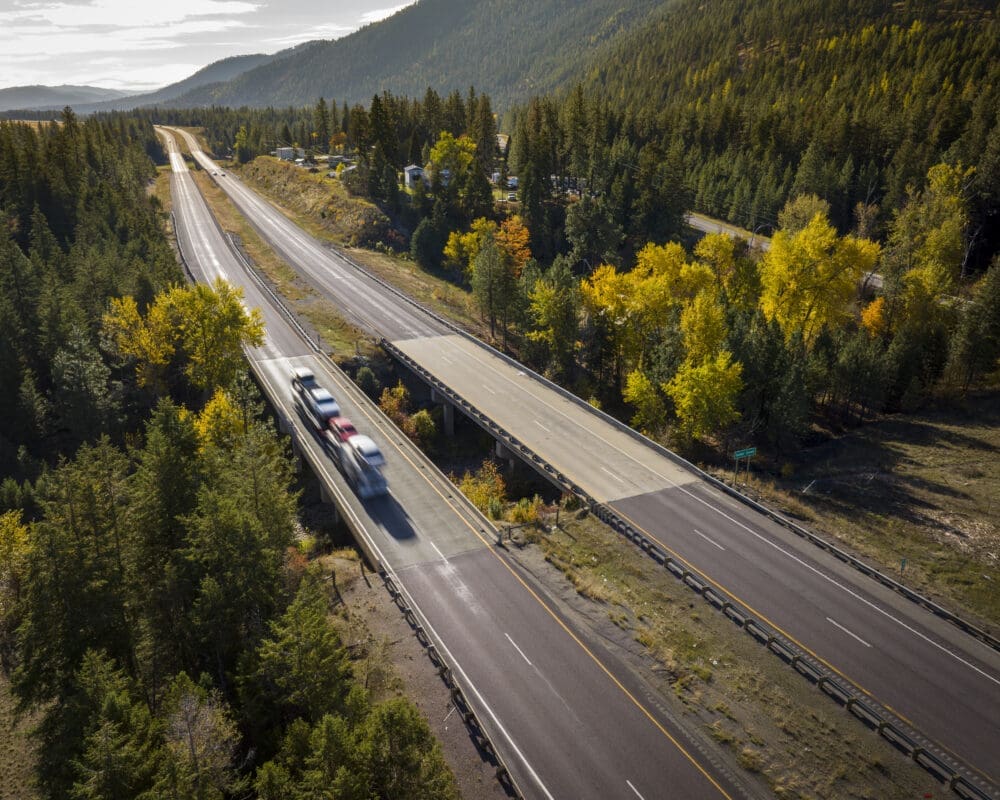
Importantly, it also identified some places where existing infrastructure, such as highway bridges already in place, can be modified to create viable wildlife crossings structures through more simple interventions, such as via the addition of wildlife fencing.
Momentum, not perfection
What made this trip stand out wasn’t just engineering; it was the spirit behind it and seeing an entire system of wildlife crossing projects working together. This recent visit sparked enthusiasm for future conversations between Alberta and Montana to share knowledge, expertise and lessons learned.
Banff shows what a successful, connected system can look like. Montana shows there’s real opportunity to build on the infrastructure already in place. Y2Y is thrilled to celebrate the progress and energy happening now. Now’s the time to keep building safe passages for people and wildlife.
Y2Y is working with government agencies, Indigenous partners, scientist and engineers, with the support of our donors and funders, to establish a network of wildlife crossings over – and under – highways to keep wildlife and people safe and moving. Y2Y helps to facilitate, convene, provide research, fund, engage partners and deliver cross-cutting solutions in this vital but still emergent area.
Related stories
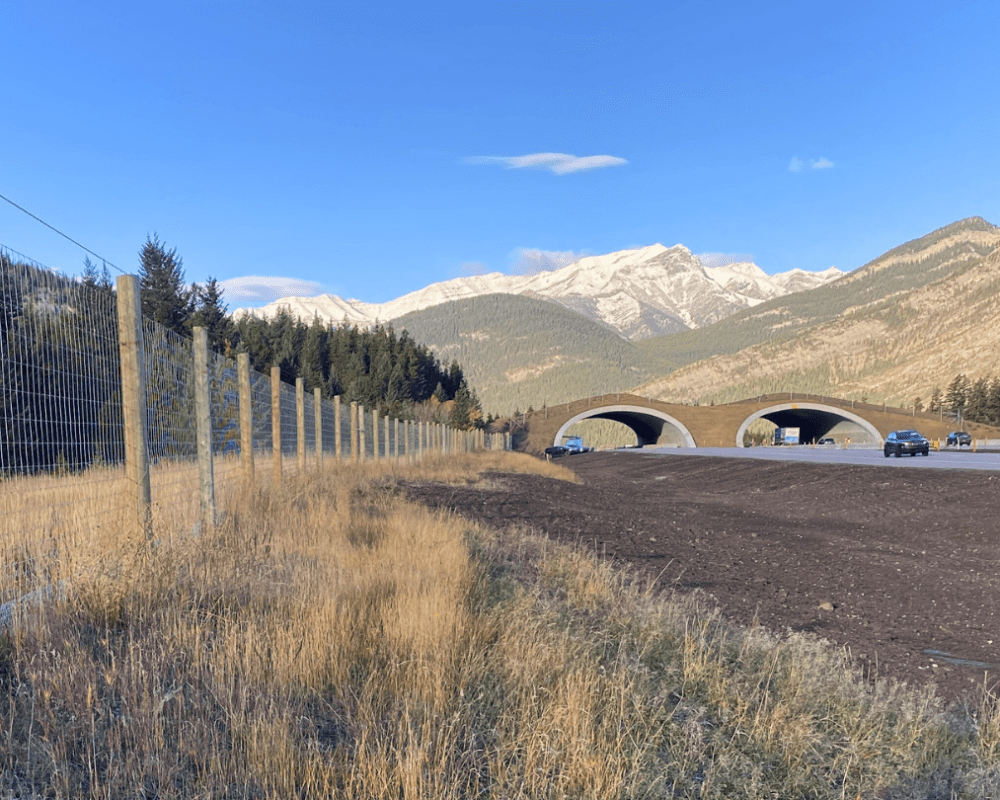
Celebrating the official opening of the wildlife crossing over Highway 1 near Canmore, Alberta
Y2Y celebrates the official completion of Alberta’s first wildlife overpass outside Banff National Park.
Montana unites: Ranchers, Tribes, and policymakers rally around wildlife crossings
In April, Y2Y cohosted a speaking event series in towns across Montana for experts to share the successes of wildlife crossings in the state.