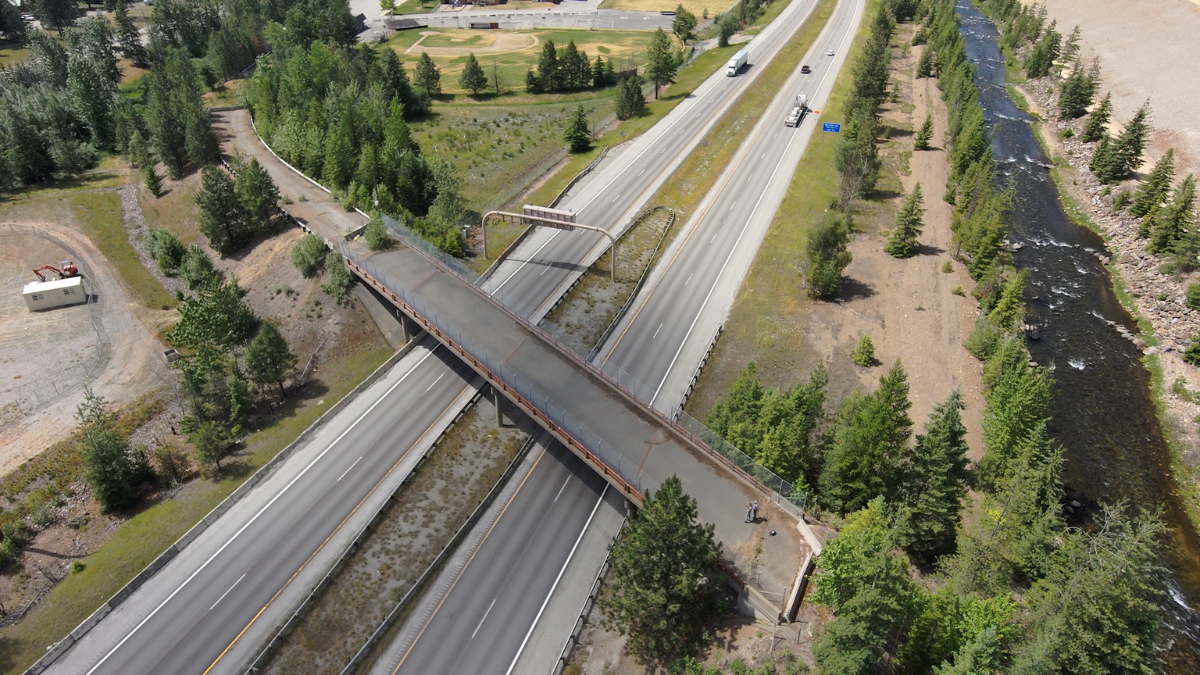
Interstate 90 just east of Coeur d’Alene, Idaho, winds through the Silver Valley alongside picturesque lakes and through misty pine forests as it works its way to the Montana border.
This scenic yet incredibly busy highway hosts thousands of travelers each day. That traffic has proven deadly for wildlife, and a two-mile stretch near the historic town of Osburn recorded the second-highest density of roadkill on the stretch of I-90 between Seattle and Boston in the past decade, with at least 75 animals struck by vehicles.
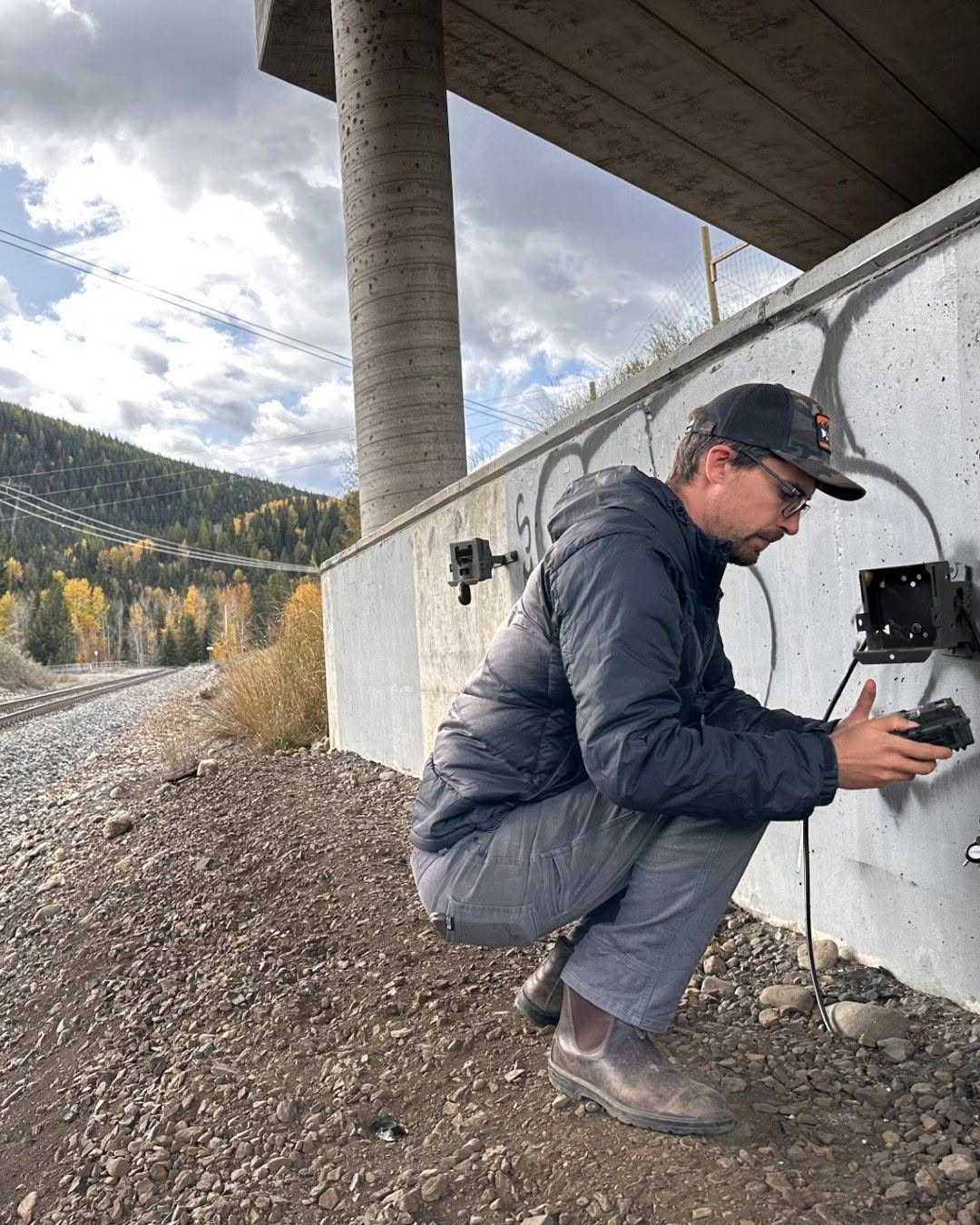
The community decided to take action, partnering with Y2Y, Idaho Transportation Department, and others to add fencing to turn an abandoned bridge over the highway into a wildlife crossing to keep wildlife and people safe. “The funnel fencing is working well to keep animals safe as they move through their habitat. Cameras already show deer regularly using the overpass,” says Laura Wolf, regional wildlife biologist with the Idaho Department of Fish and Game.
Like other crossings, the Idaho crossing connects key habitats in the region, helping wildlife access food and mates and reducing collisions between wildlife and vehicles. The crossing is one of 204 crossing structures currently bridging the Yellowstone to Yukon landscape, with nine of these structures located in Idaho alone.
2025 has been an important year for habitat connection.
Elsewhere in the region we also made meaningful progress to enhance wildlife connectivity and improve safety for communities and visitors to the Rockies.
In Montana, public polling revealed growing support for wildlife crossings, helping to create the right environment for Y2Y and partners to work effectively with government officials to move projects forward. As a result of this broad and diverse public support, the governor signed two new pieces of Montana legislation to commit roughly $500,000 annually to advance wildlife crossings.
Through the Reconnecting the Rockies project in Alberta and British Columbia, Y2Y worked with non-profits, Indigenous and non-Indigenous communities, scientists, government, and industry. This coalition secured agreement for multiple wildlife crossings along Highway 3 in a key corridor spanning the Canadian–U.S. border and the Alberta–British Columbia (B.C.) boundary, linking Banff National Park with the Waterton-Glacier International Peace Park. Y2Y was instrumental in securing Parks Canada funding for the latest phase, embedding 10 crossing points connected by fencing along Highway 3 in Alberta and B.C., including the just-completed Rock Creek underpass — a hotspot for wildlife-vehicle collisions expected to pay for itself in under 15 years through savings on property damage, insurance costs and more.
We also achieved major connectivity goals through strong partnerships between Y2Y, landowners, and other organizations.
Two key western Montana habitat linkages for grizzly bears and other wide-ranging wildlife will be protected from subdivision and development after The Vital Ground Foundation and Y2Y teamed up to conserve two critical pieces of land along I-90 on either side of Missoula. Both projects carry significance for region-wide grizzly bear connectivity, conserving low-elevation habitat near existing underpasses that wildlife use to cross under the highway and connect mountain ecosystems. These projects were made possible by voluntary, private land conservation efforts by landowners and Y2Y donors.
In October, The Nature Conservancy of Canada completed a key land purchase in southeast B.C.’s Elk Valley, conserving 45,000 hectares (112,000 acres). Y2Y was proud to contribute to this effort of securing parcels essential in keeping wildlife in the Y2Y region connected. This landscape is part of the greater Kootenay Forest Lands projects, and holds critical migration corridors for wolverines, lynx, grizzly bears, wolves, and other wildlife who need large ranges to survive, and strengthens wildlife connectivity in one of B.C.’s most iconic landscapes.
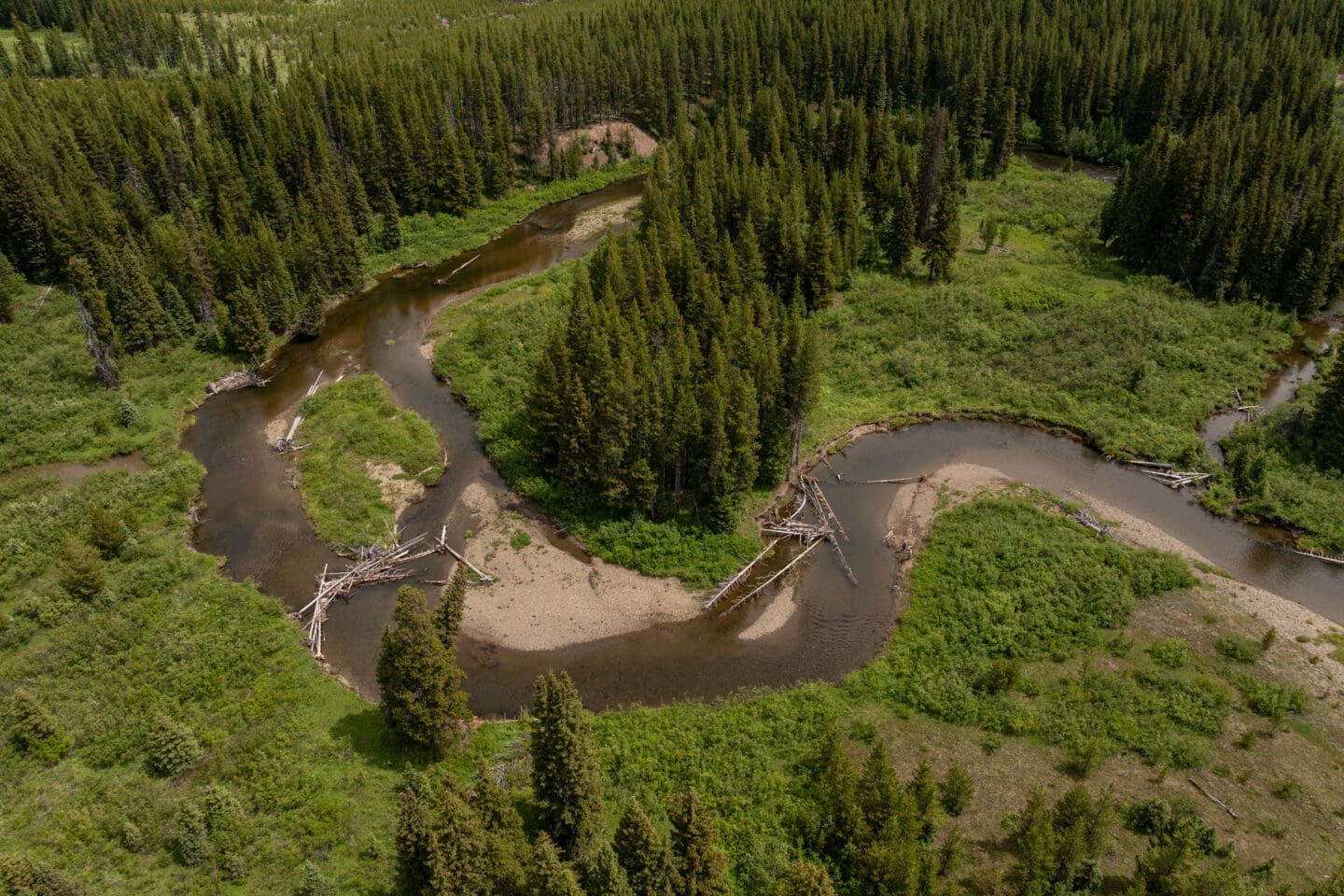
Thanks to your support, Y2Y’s landscape connection team can continue their important work identifying and restoring critical corridors across some of the region’s busiest roads and most important habitat connections.
Read more
One big tent: Y2Y’s 2025 impact report is here
Discover the difference you made in 2024 in Y2Y’s latest impact report.
From collaboration and science to enduring conservation
Y2Y works to advance conservation by partnering with diverse communities to connect and protect this vast, ever-changing mountain region. To guide our conservation efforts, we draw from the best available information, including from natural and social sciences as well as local and Indigenous knowledge.
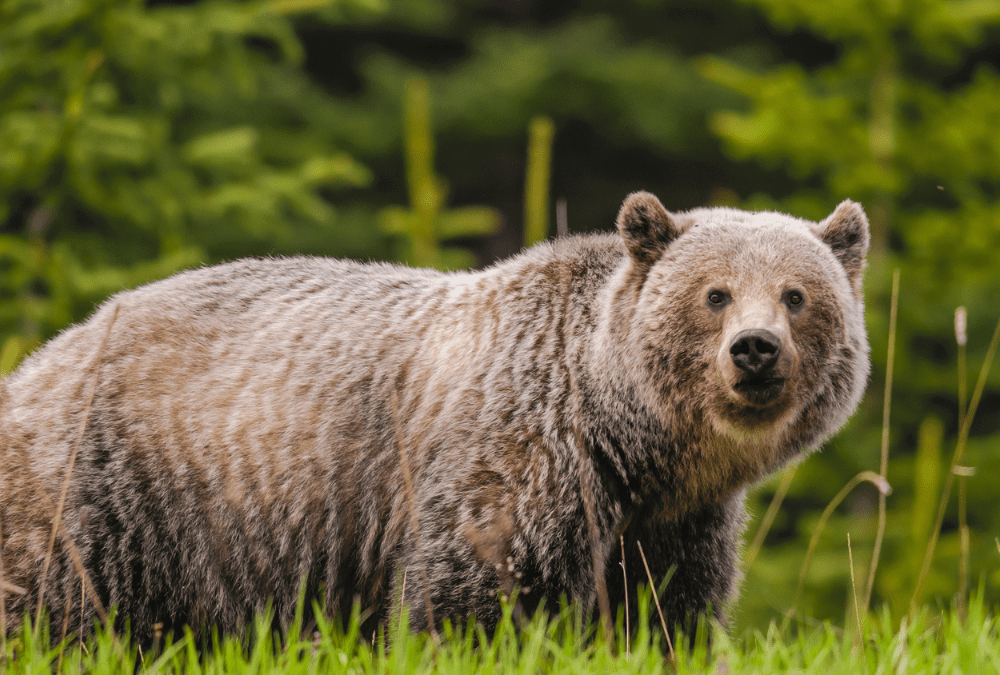
Good neighbors: Living with bears
The biodiversity in the Creston Valley, B.C., is unique and thanks to local conservation efforts, still includes grizzly bears. This has created an opportunity for the community to create solutions for how wildlife and people can live alongside each other.
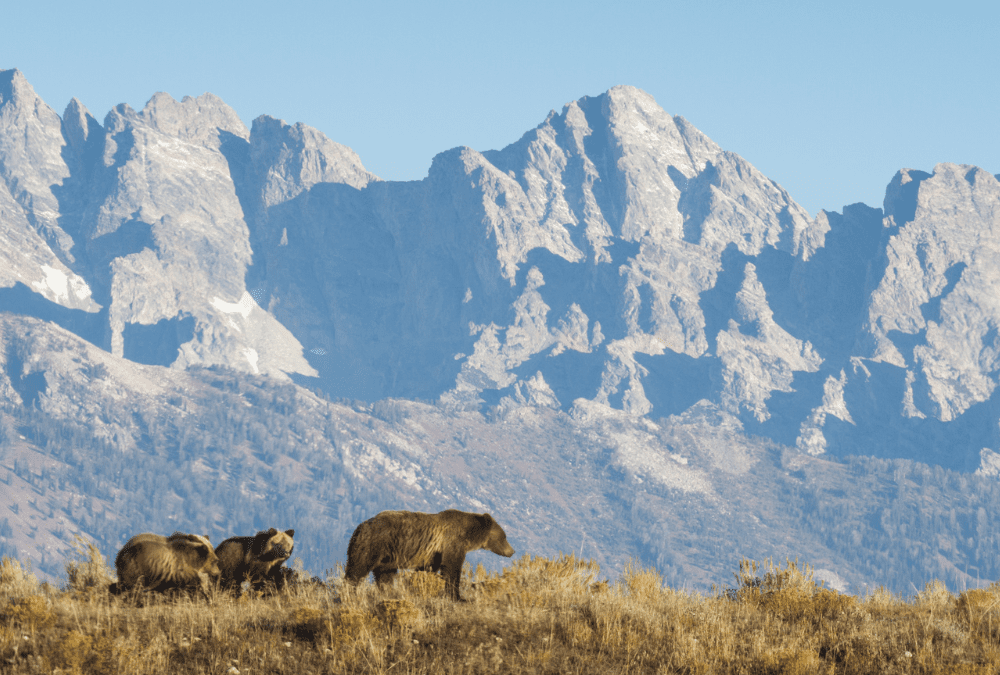
Helping grizzly bears find their way home
When Y2Y began in 1993, grizzly bear populations in the Yellowstone region had become separated by over 240 kilometers (150 miles) from bears in the Glacier National Park region of Montana and into Canada. Today, the gap between grizzly bear populations in the southern Rockies has shrunk to just 72 kilometers (45 miles).
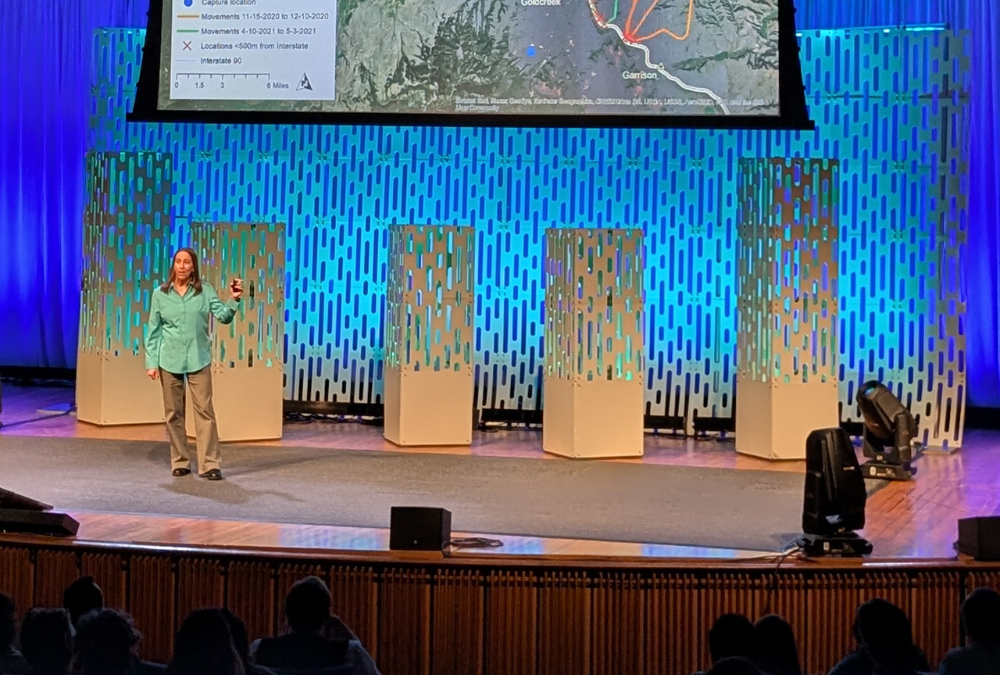
Room for everyone: Reflections on 2025 from Y2Y President and Chief Scientist, Dr. Jodi Hilty
When I think about what we’ve accomplished together this year, I’m reminded that the most powerful force in conservation isn’t any single policy, paper, or protected area — it’s people coming together around what they love.
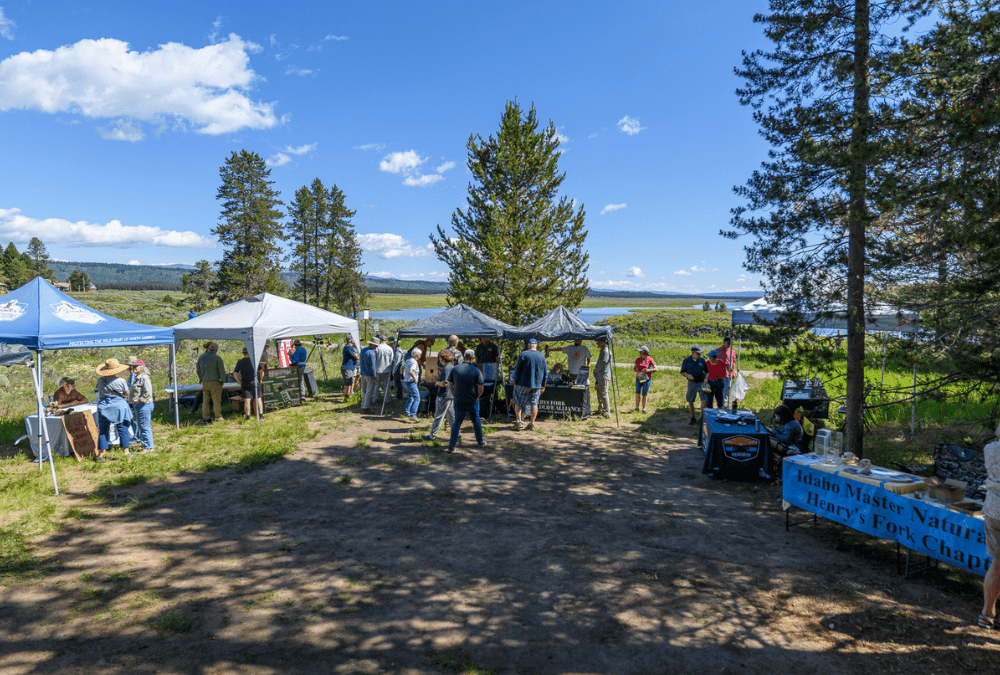
Conservation through collaboration
Achieving our vision across the Yellowstone to Yukon region — spanning the Yukon in Canada to Wyoming in the U.S. and at least 75 Indigenous territories — requires deep and ongoing collaboration. Here are just some of the impactful partnerships we are proud to be a part of in 2025.