Across the Yellowstone to Yukon region there is access to the great outdoors and nature. Recreation shapes many communities, economies, and daily life, bringing both opportunity and responsibility to protect the wildlife and landscapes that define this place.
Research shows how, where, and when we recreate affects wildlife, including bears, wolverines, goats, and caribou.
By being wildlife-wise, you can enjoy the outdoors while minimizing impacts on these species and their habitats.
Recreating near wildlife
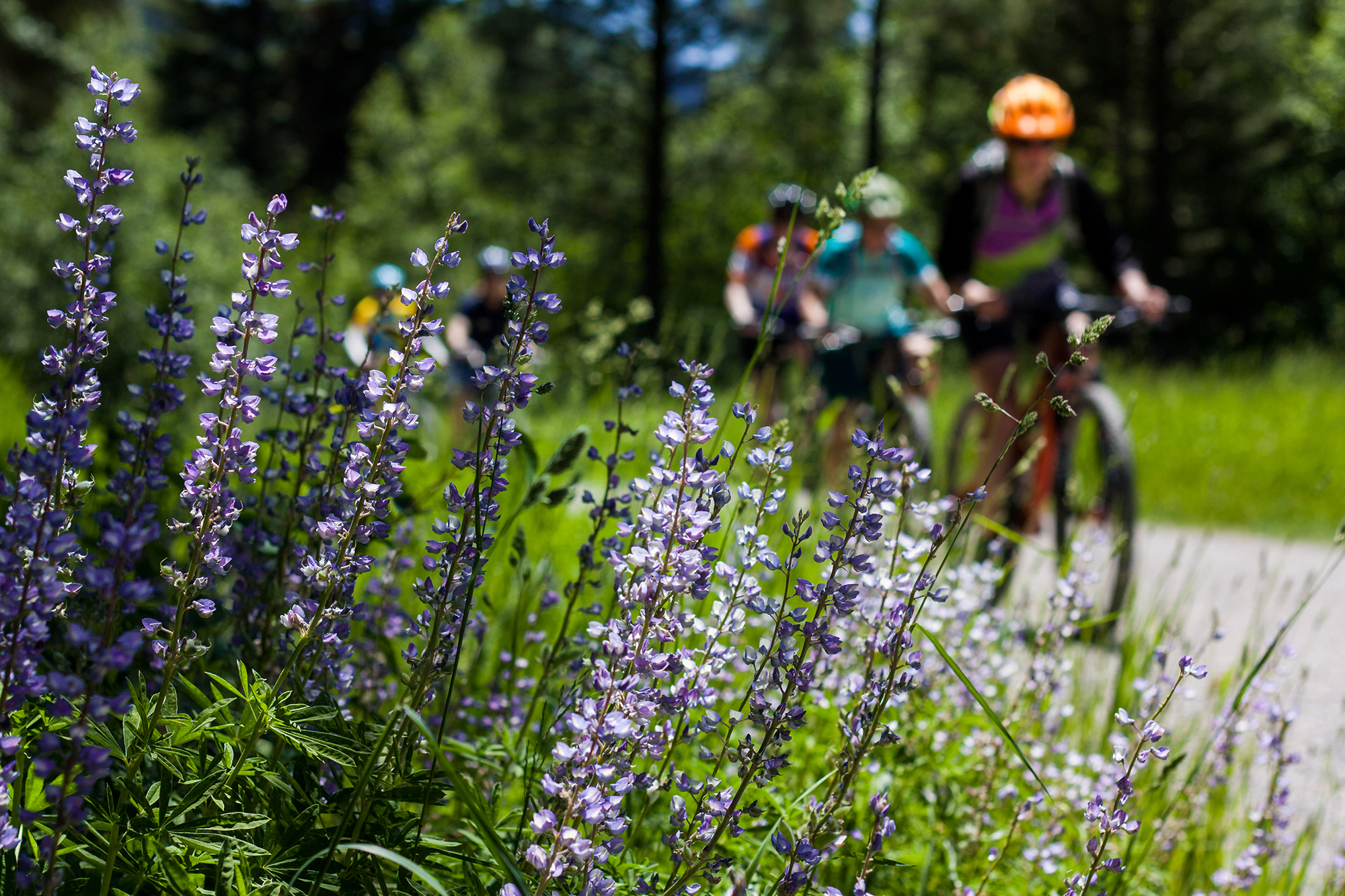
Whether you are hiking, biking, horseback riding, skiing or snowmobiling, enjoy the outdoors responsibly and:
- Know before you go. Learn about the wildlife in your area and how to respect their needs. Make yourself aware of seasons and times of day when animals are most sensitive to our presence. Find tips here >>
- Plan and adjust. Follow posted signs for wildlife in the area and closures. Be prepared to adjust your plans if you encounter signs of wildlife.
- Watch and listen for wildlife. Stay alert, listen, and watch for wildlife signs to reduce chances of a surprise encounter. When in bear country, make noise, carry bear spray in an easy to reach place and know how to use it.
- Give wildlife time and space: Travel as a group, sticking to established routes and areas, and avoid recreating at night, dawn and dusk.
- Leave no trace: Camp in designated sites and pack out what you pack in.
- Keep pets on leash. While we love our pets to be able to share in our adventures, keeping pets on a leash can mitigate surprise encounters with wildlife — keeping us all safer.
Before you go: Know your wild neighbors
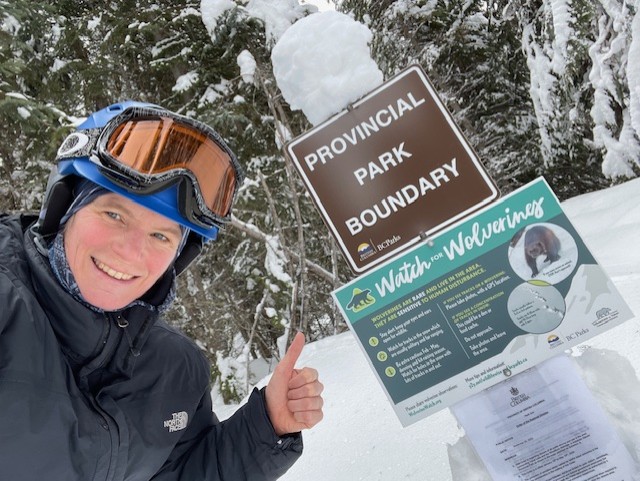
Rare and widely distributed, wolverines are isolated, tough carnivores that spend much of their time in the alpine. They have large home territories and are very sensitive to human disturbance, especially females who den and raise their kits in the winter.
Winter recreation can negatively impact denning female wolverines. There are practical and effective steps to reduce disturbance when working or recreating in wolverine habitats.
How to share space:
- Give wolverines the space they need. From January to mid-May, female wolverines den in the alpine generally near tree line. Disturbance during this time can cause wolverines to abandon their dens.
- Know the signs.
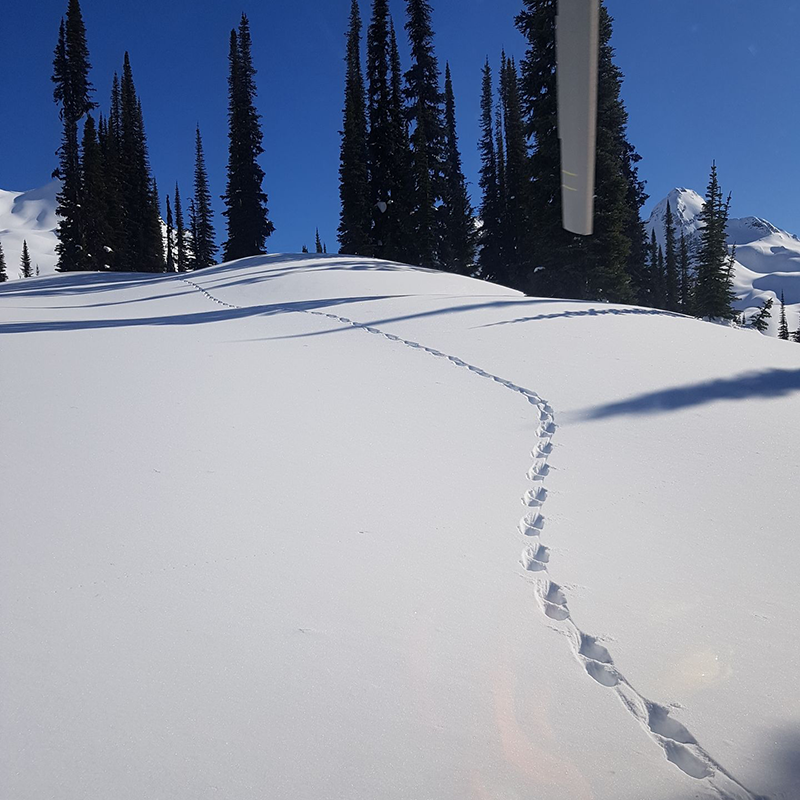
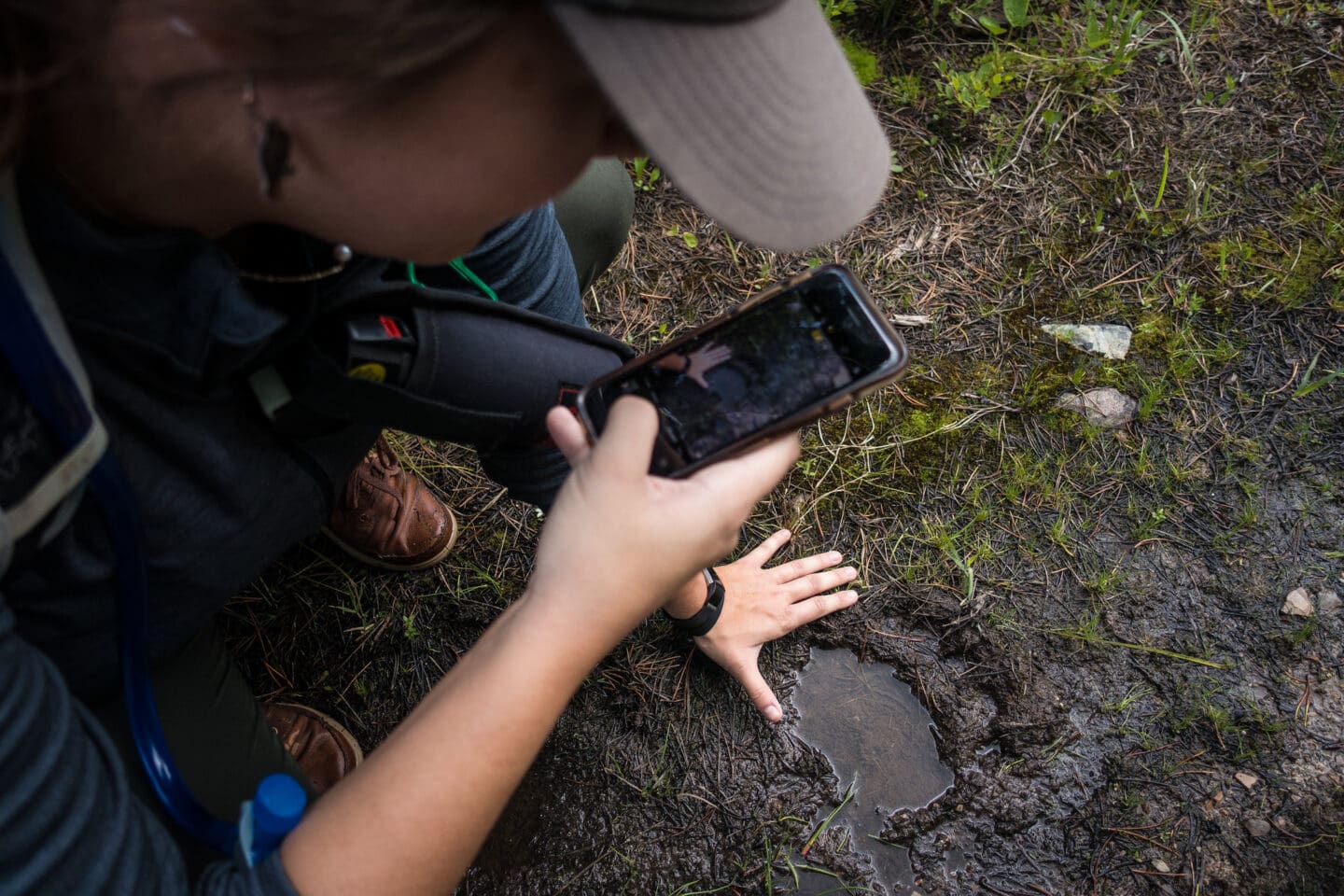
- Look for solitary, wide-set tracks that travel long distances. Tracks are often in a 2×2 or 3×3 pattern, in long, straight lines.
- Dens are deep holes in the snow, about 30 centimeters across. What helps set them apart from other holes are multiple tracks going to and from the hole and near tree line.
- If you see a network of tracks, leave the area and avoid returning during the denning period.
- See more tips and examples of dens and tracks > Your chance to research wolverines
- Reduce your impact. Increased human activities reduce the availability of suitable habitat for wolverines. Travel in smaller groups, stay on established trails or routes, and keep your activities within a small footprint to minimize disturbance.
- Report wolverine sightings to wolverinewatch.org. Learn more on guidelines for winter recreation near wolverine dens.
Playing safe in grizzly bear country
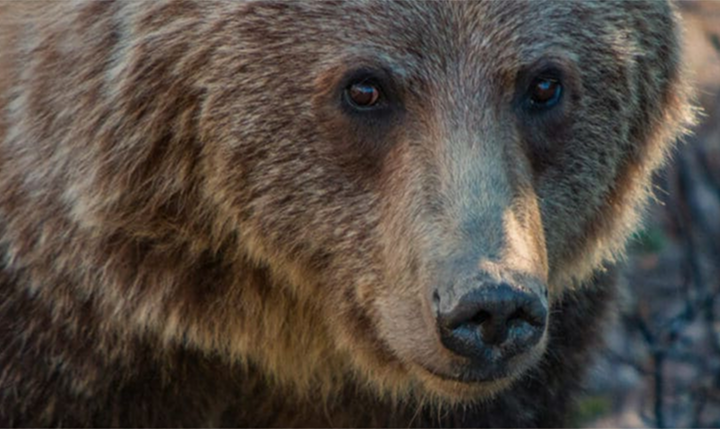
Grizzly bears are a key indicator of landscape health in the Yellowstone to Yukon region. This means their presence (or absence) shows the overall condition of an ecosystem.
Protecting grizzly bears benefits many other species in the ecosystem. Grizzly bears can be dangerous, but attacks are rare and usually preventable with proper precautions.
How to share space:
Being bear smart ensures safety for these species, and also for people, pets and property. Bear safety starts with you.
- Travel smart. Move in groups, make noise, keep pets leashed, and carry bear spray in an easy to reach place — and know how to use it.
- See the signs. Watch for bear activity such as tracks, scat, dug-up anthills, overturned rocks, or stripped berry bushes. If you see signs, leave the area while staying alert.
- Be mindful of the time of day. There are times and places that bear encounters are more likely. These include dusk, night and dawn, in noisy conditions (heavy rain, wind, running water), and when there are reduced sightlines (dense brush, blind corners, hilly terrain). When you are moving fast and quietly, such as biking or running, it increases the chance of an encounter.
Respecting mountain caribou
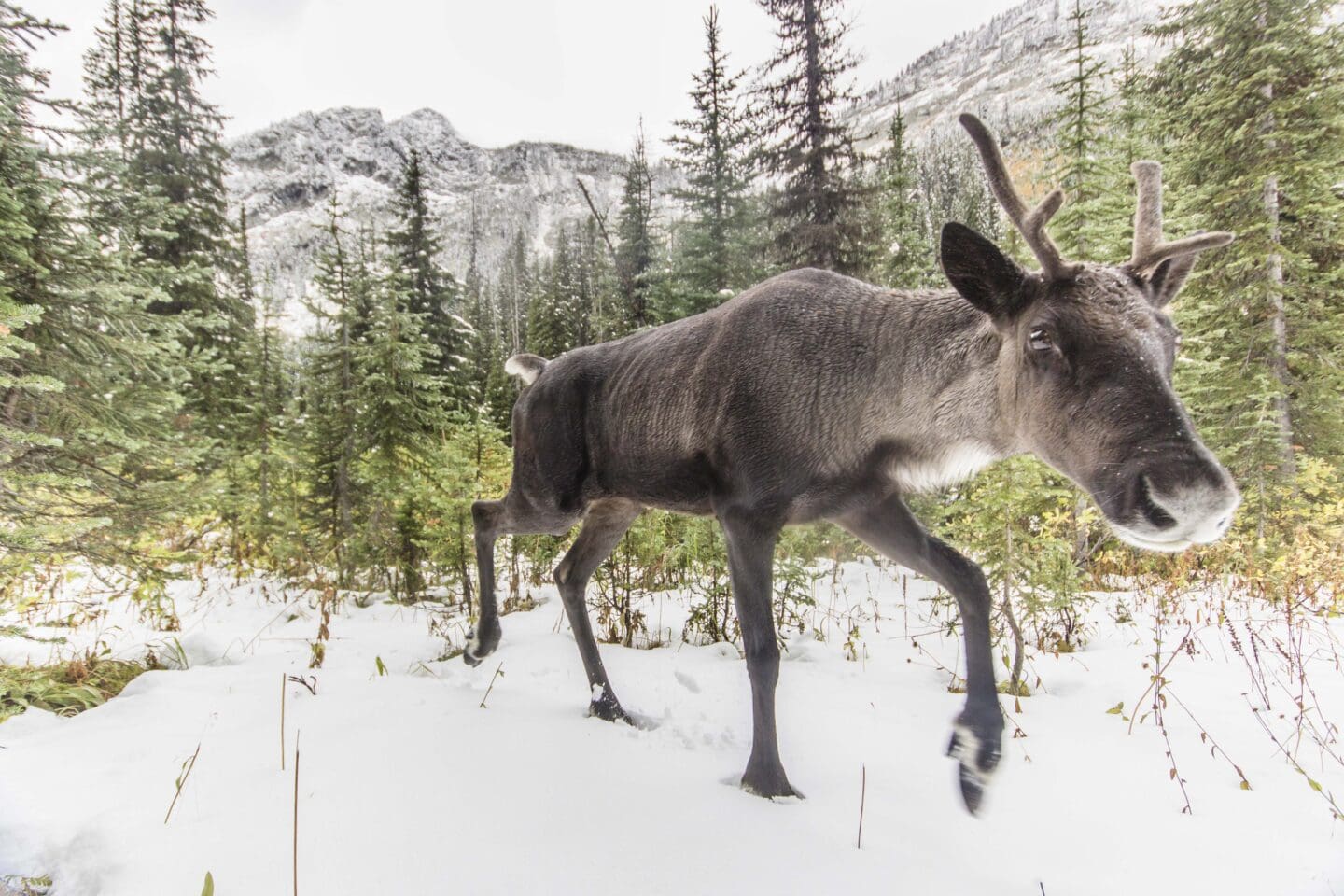
Once abundant, today mountain caribou are at risk of disappearing from our planet. In fact, some herds in the Yellowstone to Yukon region are already gone.
Mountain caribou numbers have declined due to the cumulative effects of habitat loss, changes in predator patterns, displacement, and the increasing impacts of climate change. Backcountry recreation can further disturb caribou.
How to share space:
- Respect closures: Respect designated closures, stay in designated areas and on marked trails. Look up caribou closures in your area before you head out. In British Columbia the province lists closures.
- Watch for caribou signs and give space: Avoid following caribou tracks. If you see caribou, give plenty of space and turn off any engines. More tips here.
Share the slopes with mountain goats
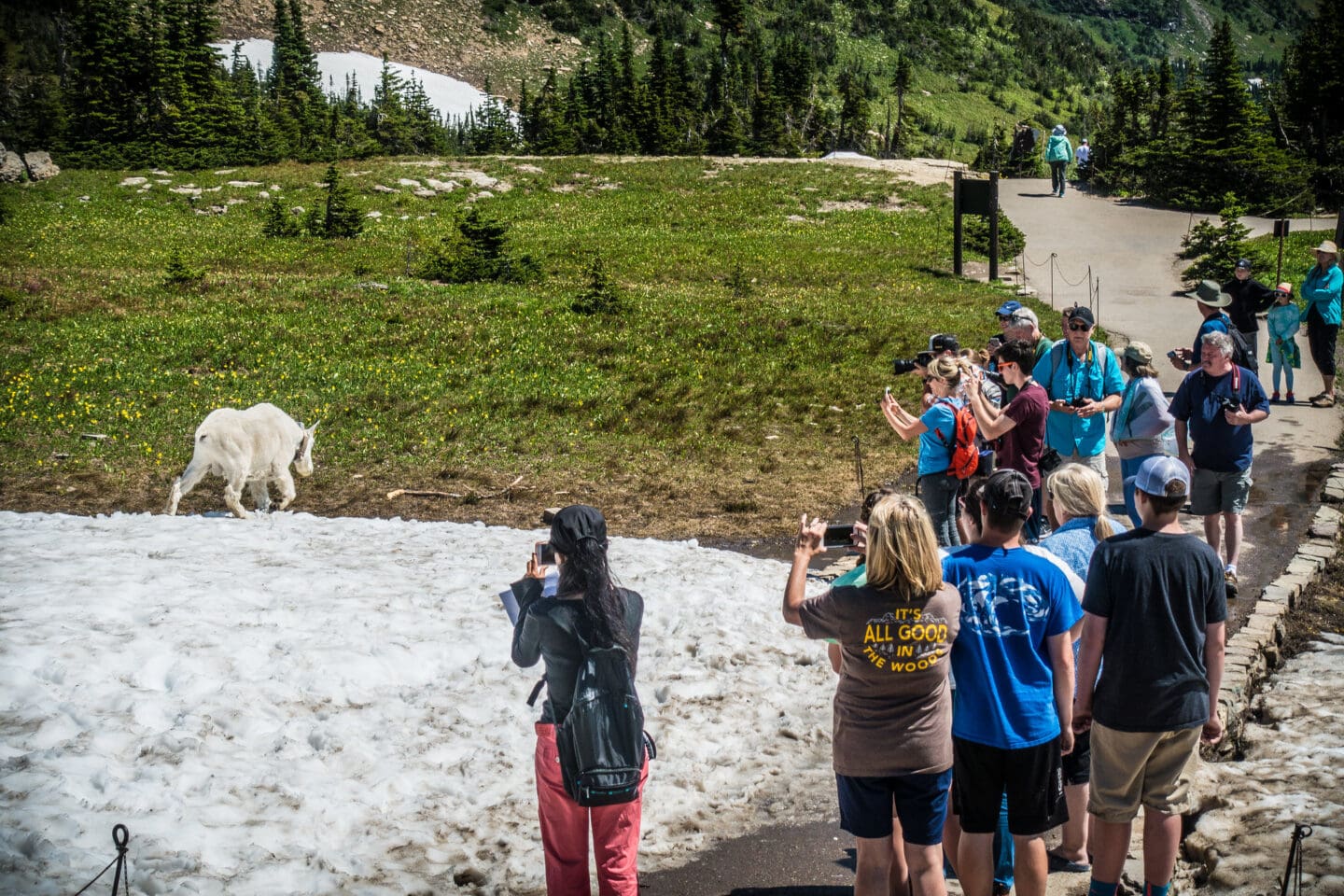
Mountain goats are usually found on steep, rocky slopes and alpine meadows. They are sensitive to disturbance, especially in winter when food is scarce and moving through deep snow takes extra energy.
How to share space:
- Respect closures: Follow winter range restrictions and stick to designated trails.
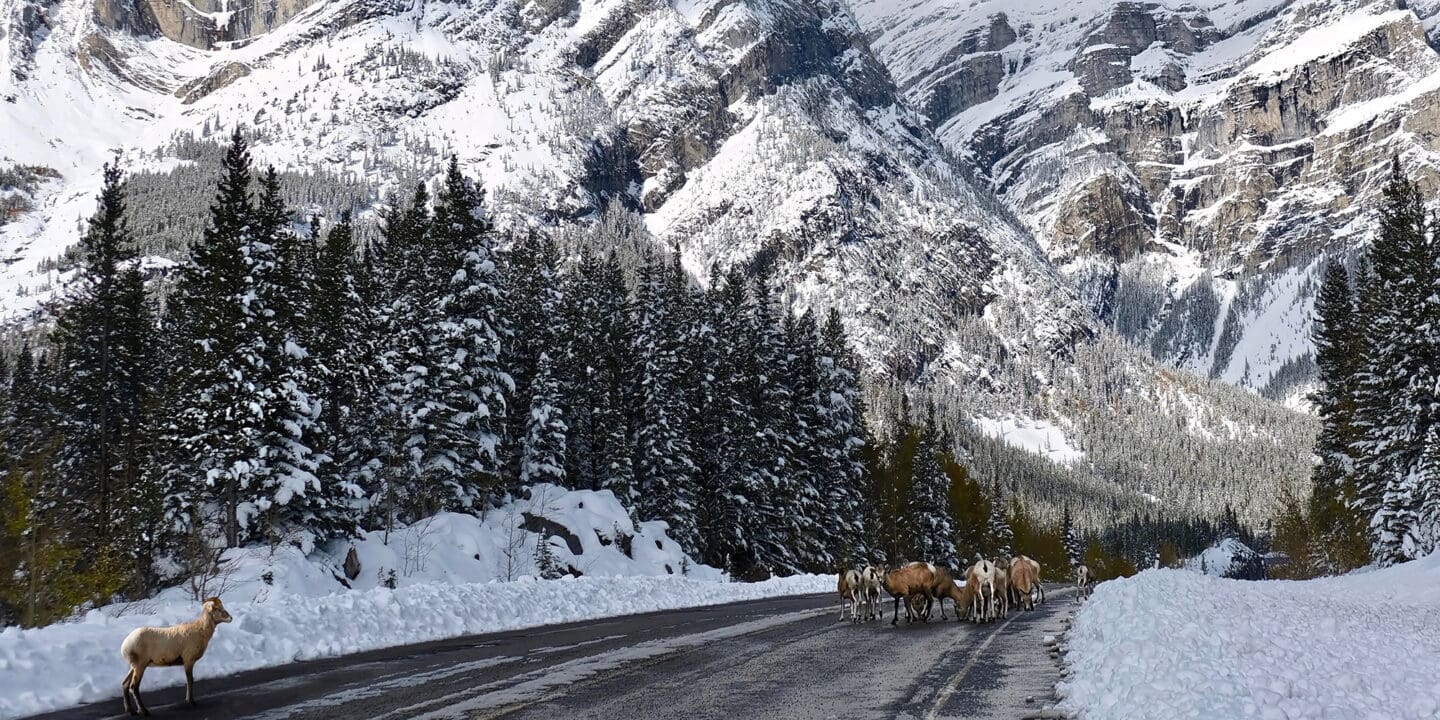
- Watch for goats and give space: Look for steep slopes, ridgelines, or rocky outcrops. If you see goats or tracks, change your route and stay at least 500 m away.
- Leash dogs: Goats can be aggressive toward pets.
- In B.C., report observations of mountain goats, thinhorn sheep and bighorn sheep.
Resources to help you be wildlife wise
Y2Y hosted wildlife wise workshops with caribou and wolverine biologists. Watch the recordings to learn more and get tips for recreating in these areas:
Print and share “We’re all pow lovers” posters at your trailhead or coffee shop, or share with your recreation club to encourage others to be wildlife wise.
Learn about Y2Y and UNBC’s recreation ecology research project helping to shape better recreation planning and management.
Read more