
NPEC: Building Canada, keeping nature whole
Connected landscapes are a lifeline for ecosystems, helping animals to find food, homes, and mates. The National Program for Ecological Corridors (NPEC) is Canada’s groundbreaking tool for keeping nature connected as we grow.
Launched by Parks Canada in 2022, with $60.6M collaborative investment over five years, it is the world’s first national program to identify, establish, and protect key habitat connections between existing conservation areas.
Protecting nature’s pathways
A diverse range of partners and stakeholders identified 23 National Priority Areas where connectivity brings the biggest benefits for biodiversity, climate resilience, and communities. NPEC funds locally led projects that reconnect fragmented habitat across Canada, from the Rockies to the Maritimes.
This goes beyond new federal parks. NPEC links existing protected areas, Indigenous lands, working forests, farms, and conservation zones into functional networks where wildlife can move, ecosystems can adapt, and communities can thrive.
At COP15, ecological connectivity was central in Canada’s 30×30 biodiversity commitment. NPEC is the tool to deliver on this — advancing reconciliation, climate solutions, and a national identity rooted in nature. With stable funding, Canada can help meet the 30×30 promise and retain these unique elements of our heritage.
NPEC is more than a domestic innovation. It’s a core mechanism for delivering on international promises. It reconnects landscapes so wildlife can move and ecosystems can function. It also provides economic and social returns that set up communities to thrive while Canada grows.
By clearly identifying and enhancing or protecting these priority linkages, we can ensure the effectiveness of our protected areas networks while reducing potential for conflict resulting from competing land use expectations or strategies.
Additionally, this approach helps identify priority linkage areas early, allowing development and resource extraction projects to avoid or mitigate impacts on critical wildlife corridors.

What are additional benefits to connectivity?
Realizing 30×30 plans
In 2022, Canada pledged to protect 30% of its lands and waters by 2030: the minimum scientists say is needed to slow biodiversity loss and allow nature to adapt to climate change. Corridors make this promise real, connecting isolated “islands” of habitat into a vital network of resilient landscapes.
Corridors pay for themselves: Expected ROI
Funding from NPEC delivers by leveraging federal dollars with funds from on-the-ground partners to advance nation-building natural infrastructure projects. 27 projects, supported by $27.3M in NPEC funding and an additional $20.2M of matching funds from project partners, are underway in 23 priority regions across Canada.
Why is NPEC important to Yellowstone to Yukon’s mission?
We know parks and protected areas are not big enough to help wildlife thrive. Animals and their need to roam demands that we think bigger. Conservation is most effective when it is at a large enough scale to protect wildlife on the move from civilization’s threats between and surrounding protected areas.
Large ecological networks, like the Yellowstone to Yukon region, can also help wildlife adapt to climate change. By protecting healthy ecosystems, and making it easier and safer for wildlife to move to hospitable ecosystems, ecological networks become an important nature-based solution to climate change.
One project that NPEC has supported in the Yellowstone to Yukon region is improving connectivity over Highway 3 through southern Alberta and British Columbia. The Government of Canada contributed more than $1.9M to Reconnecting the Rockies, to support ecological connectivity in this area, improving wildlife movement across this busy transportation route.
The funding will minimize the impact of Highway 3 on wildlife in the area, by decreasing collisions and reconnecting habitats that the highway has split.
The Governance of Ecological Connectivity in Canada
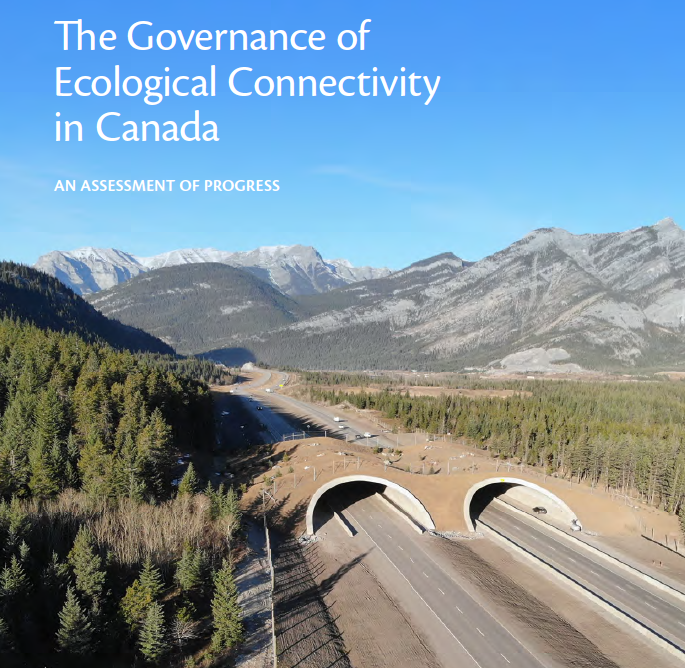
A new report from Y2Y and partners, The Governance of Ecological Connectivity in Canada, shows there is room for improvement in the laws needed to create and manage wildlife corridors.
This report reviews 11 wildlife corridor projects across Canada and reviewed federal, provincial, and territorial laws. While there are creative, community-driven solutions showing what makes corridor projects succeed, there are also gaps in making Canada’s ambitious conservation goals a reality. Read more >>
This research was made possible through funding from the Government of Canada’s National Program for Ecological Corridors and the Miistakis Institute.
related projects

New funding provides vital support for a series of wildlife crossings on Highway 3
Government of Canada contributes more than $1.9M to support ecological connectivity in southeastern British Columbia and southwestern Alberta, improving wildlife movement across Highway 3.

Creating vital connections
Connected landscapes are a lifeline for ecosystems, helping animals to find food, water and mates.