Conservation leaders, academic institutions, tribal nations, and community voices unite around a shared vision for safer roads and connected wild lands
In April, state agencies, researchers, government officials, conservation and community organizations across Montana collaborated with the launch of “Living Up to the Montana Landscape.” .This groundbreaking statewide speaking and engagement tour sparked bold dialogue, inspired action, and mobilized unprecedented collaboration around wildlife crossing projects and landscape connectivity.
The tour brought together policymakers, tribal leaders, engineers, ranchers, and community members at events in Bozeman, Missoula, Kalispell, and the Madison Valley. This effort continues to build a powerful, statewide coalition united by a common goal: keeping Montana’s wildlife wild and its roads safe.
Panelists included some of the state’s most influential voices on transportation and wildlife: Chris Dorrington, director of the Montana Department of Transportation, Lee Spangler, director of the Western Transportation Institute, and Deb Wambach, wildlife co-ordination chief of Montana Fish, Wildlife & Parks. Breanna Ball of the WYldlife Fund joined as a special guest, sharing inspiring stories about Wyoming’s successful collaborative approach to wildlife crossings.
“Montana stands at a pivotal moment for wildlife conservation and road safety,” says Daniel Anderson, senior outreach specialist for wildlife passage at Yellowstone to Yukon Conservation Initiative, the organization that facilitated and co-planned the tour.
“As the state considers expanding wildlife crossing infrastructure, local voices across communities are driving a practical, solutions-focused conversation about how these structures benefit hunters, reduce vehicle collisions, support rural economies, and showcase Montana’s engineering innovation. These events were designed to ensure those voices are heard.”
Co-hosted by Montana State University, the Bozeman event highlighted the extraordinary academic talent being cultivated across the state, and the critical role Montana’s universities can play in driving wildlife crossing solutions forward for generations.
“The discussion at the event illustrated that it all starts with what we value, how we define our problems, and what we envision a better future to look like,” says Marcel Huijser, senior research ecologist at the Western Transportation Institute of Montana State University.
“Once we have decided on these matters, we can formulate specific objectives — and only then can data and science help us make the right decisions. If we follow this logical process, we have a high likelihood of reaching our goals.”
The event in Missoula, co-hosted by the University of Montana, celebrated the depth of expertise Montana brings to wildlife connectivity from university research labs to on-the-ground tribal knowledge. The University of Montana, the Montana Department of Transportation, Western Transportation Institute, and the Confederated Salish and Kootenai Tribes each took center stage, demonstrating how diverse partners can drive lasting, community-rooted solutions.
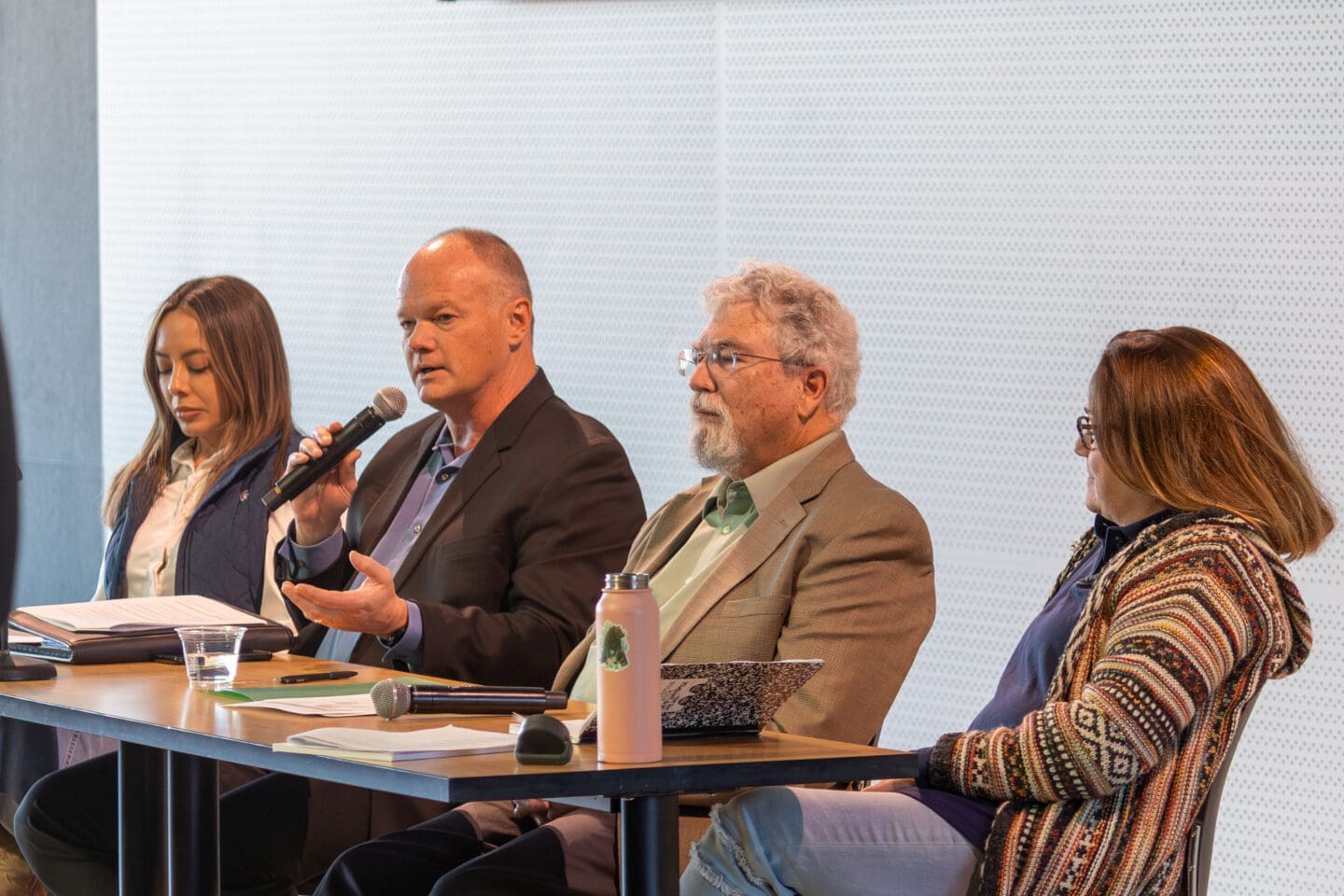
Panelists in Bozeman from left to right: Breanna Ball (WYldLife Fund), Dustin Rouse (Chief Engineer of Montana Department of Transportation), Lee Spangler (Director of Western Transportation Institute), Deb Wambauch (Wildlife division of Montana Fish, Wildlife and Parks). Photo credit: Sarah Cornish
“With Montana putting more focus on wildlife crossings and connected landscapes, now is a good time to look at places like Highway 93 to see what’s worked, what hasn’t, and how we can better align wildlife and community needs as we look to the future,” says Shawn Johnson, director of the Center for Natural Resources & Environmental Policy at the University of Montana.
“It’s really encouraging to hear how well our community understands the work we do and the benefits it brings to wildlife,” adds Whisper Camel-Means, wildlife biologist for the Confederated Salish and Kootenai Tribes.
In Kalispell, the event was co-hosted by Glacier-Two Medicine Alliance, discussing the complex opportunities and challenges unique to Montana’s rural communities and the wild country that depends on getting this work right.
“Creating opportunities to bring local community voices together is critical to developing a durable, long-term vision for protecting both people and wildlife on our highways through some of the incredible wild country we are so fortunate to still have here in northwest Montana,” says Peter Metcalf, executive director of Glacier-Two Medicine Alliance.
“This is important work that no one entity can accomplish alone,” says Deb Wambach, wildlife co-ordination bureau chief at Montana Fish, Wildlife and Parks. “The grounding of ‘Montana’s moment’ at the intersection of wildlife and transportation provided by this event was timely. We are now moving in a very coordinated way with many partners and stakeholders to achieve shared priorities supported by good science, strong community engagement, and positive will from state and federal leadership.”
“This is important work that no one entity can accomplish alone.”
— Deb Wambach, Montana Fish, Wildlife & Parks
Madison Safe Passages took the lead and co-hosted the event in Ennis which centered the voices of landowners and working lands communities. Their essential perspective in crafting wildlife connectivity solutions is practical, durable, and grounded in the realities of rural Montana life.
“Creating opportunities for ongoing dialogue and community input will be critical as Madison Valley residents develop a shared vision for what is possible to protect people and wildlife in our unique Montana landscape,” says Linda Owens of the Madison Valley Ranchlands Group.
Media coverage of these events includes: Montana pushes wildlife crossings to cut collisions (Bozeman Daily Chronicle, Apr. 20, 2026)
Related stories
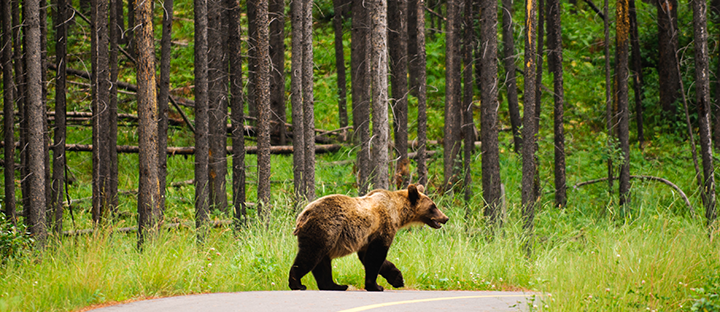
Exciting opportunity for new wildlife crossings in U.S. parts of Y2Y region
A new U.S. federal funding program will make roads safer for people and wildlife — and keep habitat connected.
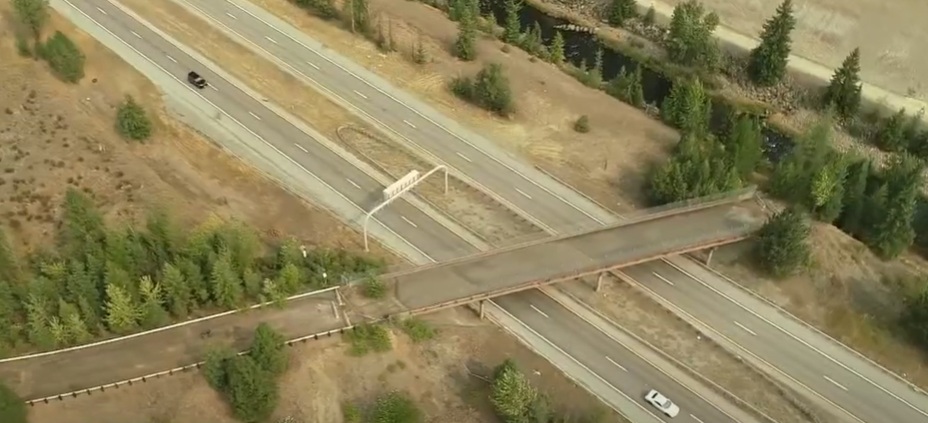
A ‘bridge to nowhere,’ gives wildlife and drivers safe passage
A new wildlife overpass and fencing project springs forth from an abandoned bridge over Interstate 90 in north Idaho.